
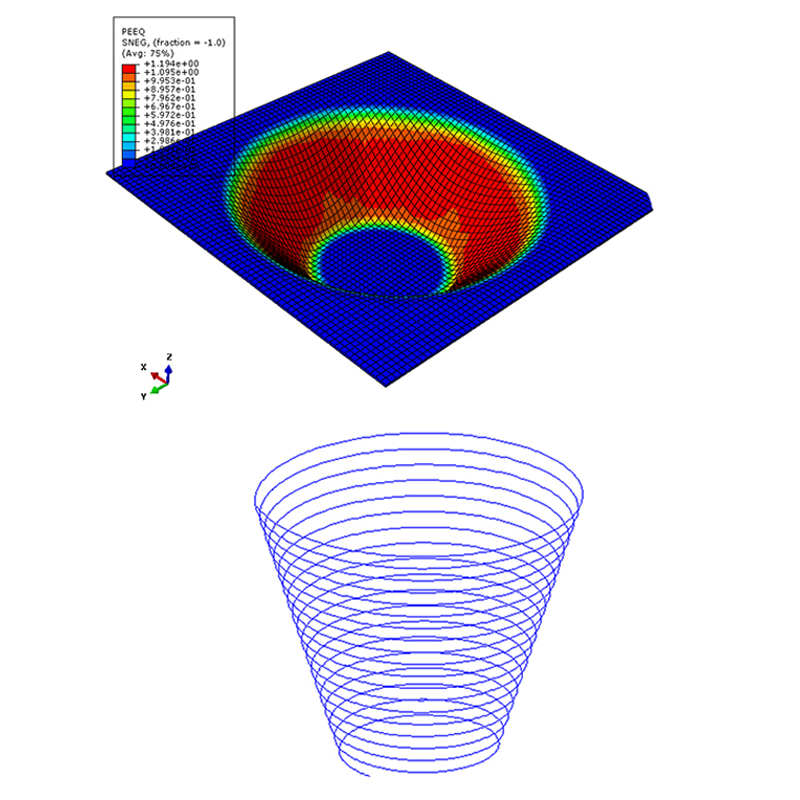
Project Overview
In this Abaqus project, you will learn how to generate the tool path for the Incremental Sheet Forming (ISF) process using MATLAB, Excel, and Abaqus.
The main objective is to define the movement of the forming tool along a spiral path. This tool movement allows the sheet to be formed gradually into a conical shape during the incremental sheet forming process.
Incremental Sheet Forming of Conical Parts
This training project consists of two sections. In the first section, the incremental sheet forming process is performed for a 120-degree cone. In the second section, the same process is performed for an 80-degree cone.
In both cases, the tool follows a conical and spiral path while gradually forming the sheet.

Incremental sheet forming of the 120-degree cone.

Incremental sheet forming of the 80-degree cone.
Spiral Tool Path
During the forming process, the tool moves along a spiral path. This movement causes the sheet to be formed progressively rather than forming the entire shape in a single step.
Since the tool follows a conical trajectory, MATLAB is used to generate the coordinates required to define the tool movement.
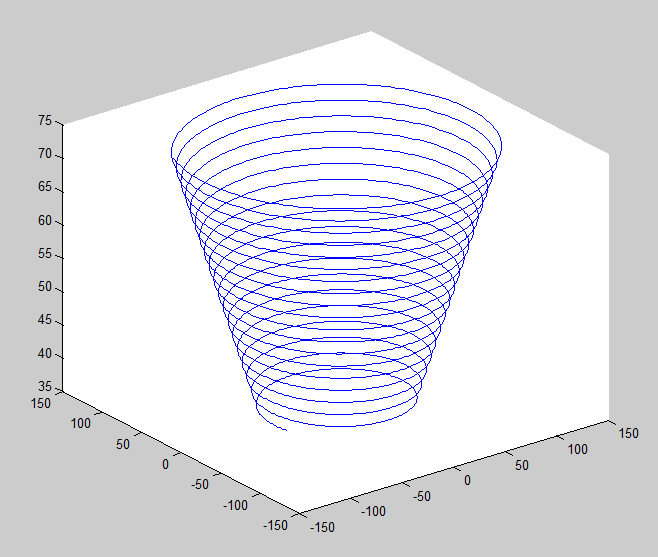
Spiral path followed by the forming tool.
Generating the Tool Path Using MATLAB
MATLAB is used to calculate and generate the tool-path data. The process is divided into several steps so that the tool movement can be properly defined in Abaqus.
Step 1 – Define the Time Period
First, the time period of the tool movement is defined in MATLAB. In this example, the total time period is 800 seconds.

Defining the time period for the tool movement in MATLAB.
Step 2 – Export MATLAB Data to Excel
After generating the required data in MATLAB, the data is exported to Excel. The Excel files are then used to organize the tool-path coordinates required for the Abaqus simulation.
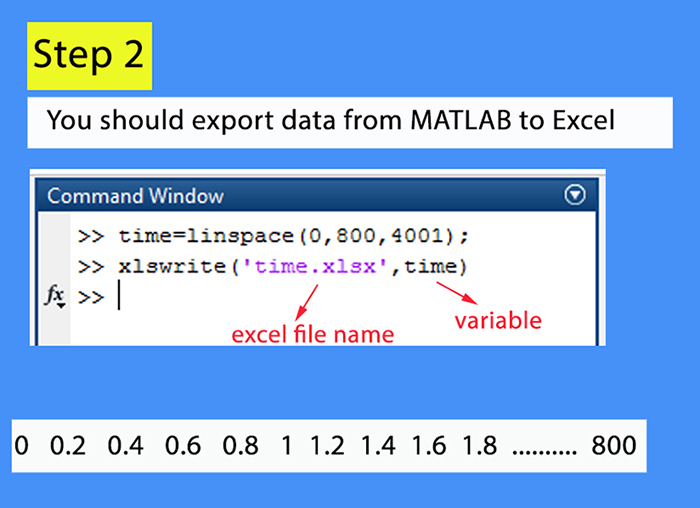
Exporting the generated tool-path data from MATLAB to Excel.
Step 3 – Determine the Line Slope
In the next step, the line slope is determined using MATLAB. This information is used as part of the procedure for defining the movement of the forming tool.
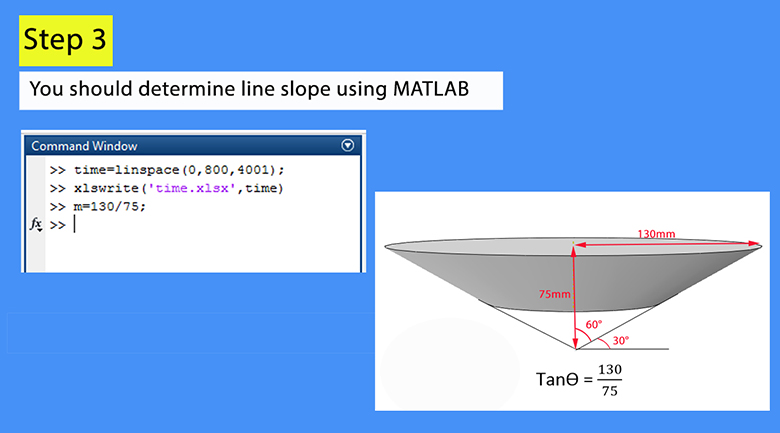
Determining the line slope using MATLAB.
The remaining steps for generating and defining the complete tool path are explained in the full training video.
Sheet Geometry
The sheet used in this simulation is made of aluminum. Its dimensions are 320 mm × 320 mm, and its thickness is 2 mm.

Aluminum sheet used in the incremental sheet forming simulation.
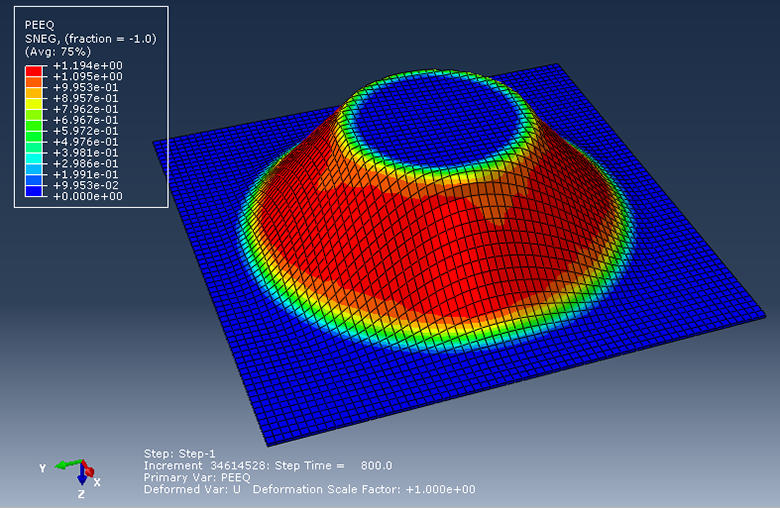
Aluminum sheet used in the incremental sheet forming simulation.
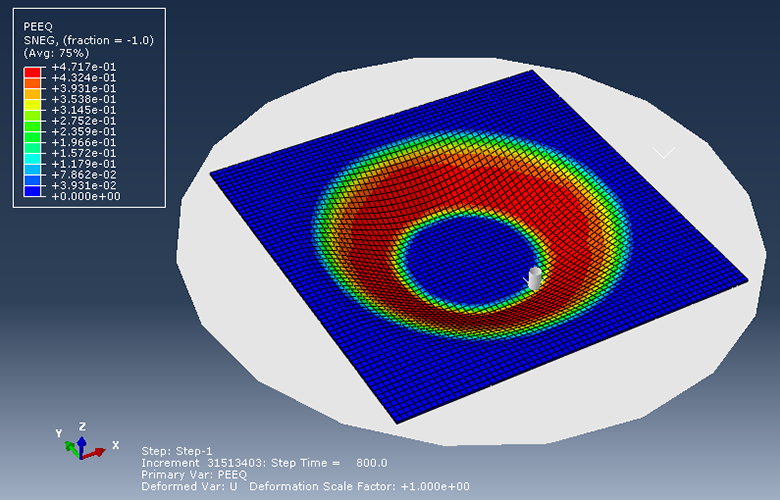
Aluminum sheet used in the incremental sheet forming simulation.

Aluminum sheet used in the incremental sheet forming simulation.
Tool Movement in Abaqus
After generating the tool-path coordinates using MATLAB and organizing the data in Excel, the tool movement is defined in Abaqus. The generated coordinates are used to control the position of the forming tool throughout the analysis.
This approach allows the complex spiral movement of the tool to be reproduced in the Abaqus simulation.
What You Will Learn
- How to model an incremental sheet forming process in Abaqus.
- How to generate a spiral tool path.
- How to generate tool-path coordinates using MATLAB.
- How to define the time period of the tool movement.
- How to export MATLAB data to Excel.
- How to determine the line slope using MATLAB.
- How to use Excel data for defining tool movement in Abaqus.
- How to define a moving forming tool in Abaqus.
- How to simulate incremental sheet forming of an 80-degree cone.
- How to simulate incremental sheet forming of a 120-degree cone.
Key Features
- Incremental Sheet Forming (ISF) simulation.
- MATLAB-based tool-path generation.
- Spiral tool path.
- 80-degree cone forming.
- 120-degree cone forming.
- Aluminum sheet.
- Sheet dimensions: 320 × 320 mm.
- Sheet thickness: 2 mm.
- Tool-path data in Excel.
- MATLAB files for both cone geometries.
- Abaqus CAE file.
- Abaqus INP file.
- Step-by-step training video.
Project Information
Important information about this project
Payment & Support
Need help with your purchase?
Secure Payment
Your payment is processed securely through our online payment system.
Need Help?
If you have any questions about this product, please contact us by email.
saeedofmoeini@gmail.com
Hicham
I want this contents.
Admin
Hello
You can buy online from the site using a credit card