
Product Overview
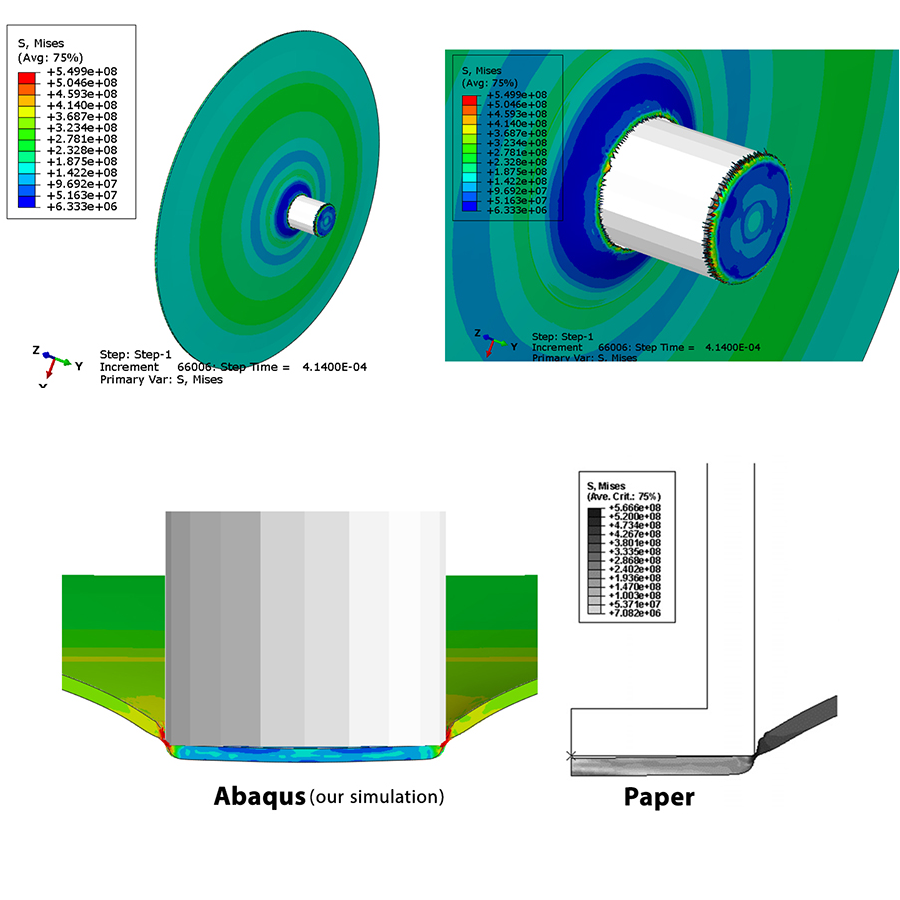
In this example, we intend to simulate the impact of a blunt-nosed projectile with an Aluminum plate using the Abaqus software.
Model Description
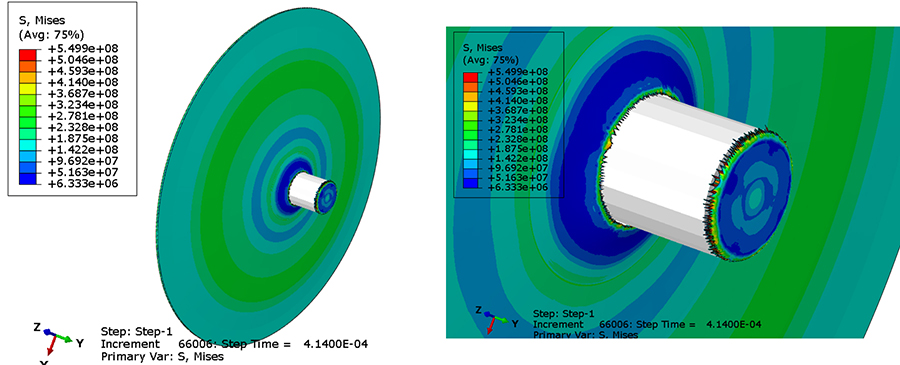
In this problem, the blunt-nosed projectile is modeled as a rigid body, while the target plate is made of 1100-H12 Aluminum.
Johnson-Cook Damage Model
To accurately simulate the material failure during the high-velocity impact, the Johnson-Cook damage model is used in Abaqus. This model is suitable for describing the failure behavior of ductile metals under conditions involving large plastic deformation, high strain rates, and material failure.
In this simulation, the Johnson-Cook damage model is used to predict the initiation and evolution of damage in the material during the impact process. The model considers the effects of plastic strain, strain rate, and temperature on material failure.
Impact Analysis
In this analysis, the blunt-nosed projectile impacts the Aluminum plate. The deformation and impact behavior of the Aluminum plate are investigated using Abaqus.
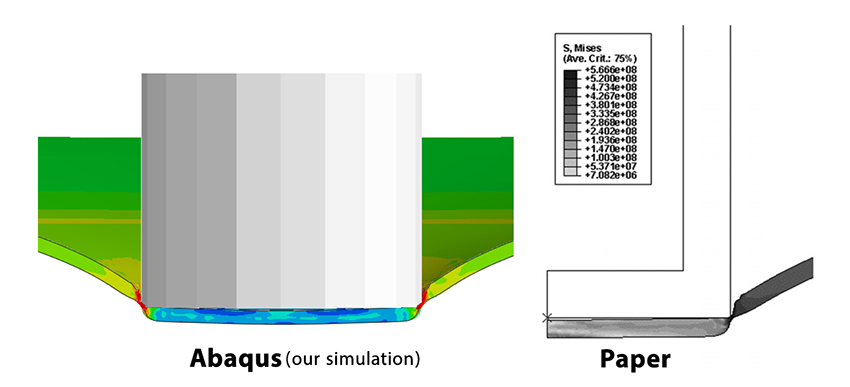
Deformation
The deformation obtained from the Abaqus software is compared with the experimental results. As can be observed, the numerical results are very similar to the experimental results.
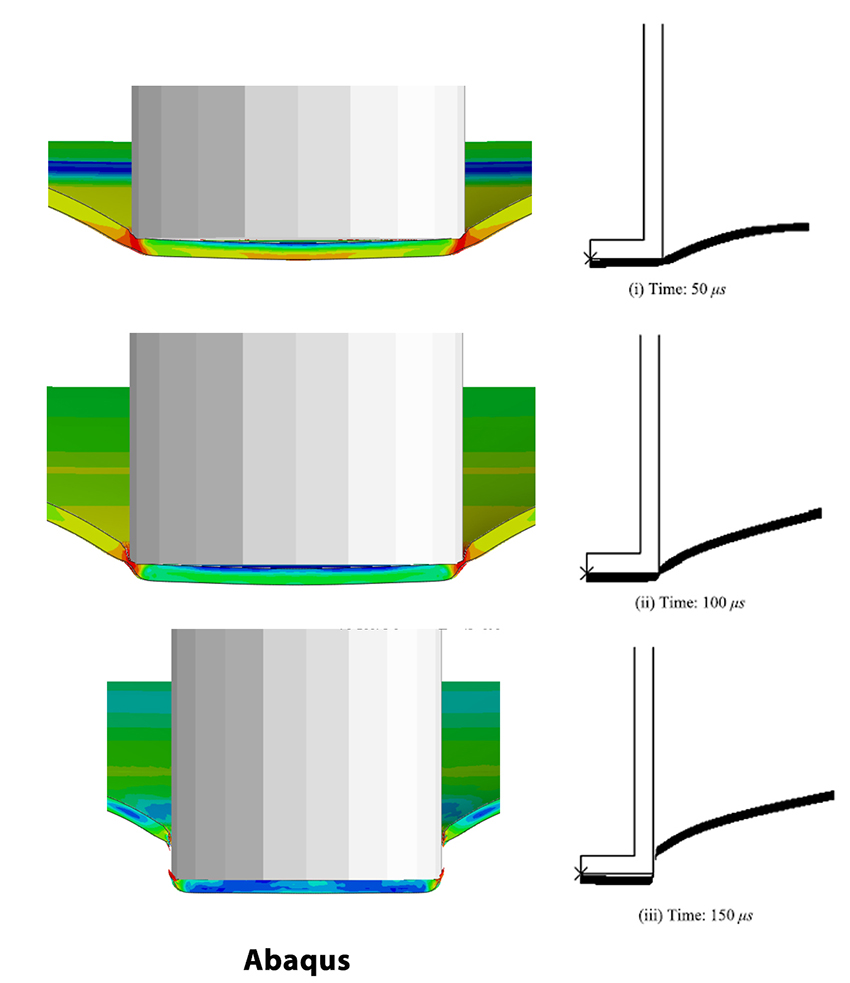
Residual Velocity
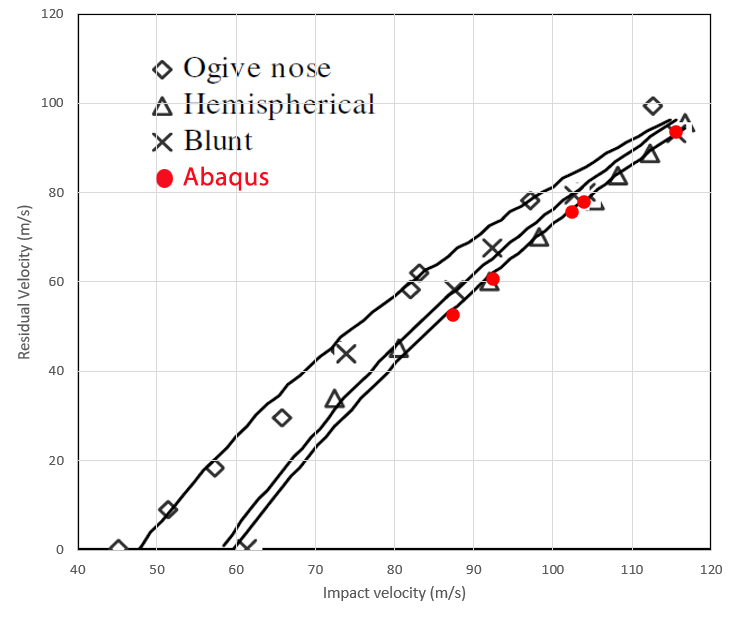
The residual velocity of the projectile is obtained from the Abaqus analysis. A diagram of the residual velocity based on the initial velocity is plotted.
Validation
This project has been validated, which means that the results obtained from the Abaqus software are similar to the results of the article.
In other words, this project is based on the reference article.
What You Will Learn
- How to model a blunt-nosed projectile in Abaqus.
- How to define the projectile as a rigid body.
- How to model an Aluminum 1100-H12 plate.
- How to define the impact analysis.
- How to use the Johnson-Cook damage model for material failure.
- How to investigate the deformation of the Aluminum plate.
- How to compare Abaqus deformation results with experimental results.
- How to obtain the residual velocity of the projectile.
- How to plot the residual velocity versus initial velocity diagram.
- How to validate the numerical model using the reference article.
Key Features
- Impact analysis of a blunt-nosed projectile.
- Rigid projectile modeling.
- 1100-H12 Aluminum plate.
- Johnson-Cook damage model.
- Impact deformation analysis.
- Comparison between Abaqus and experimental results.
- Residual velocity analysis.
- Residual velocity versus initial velocity diagram.
- Validation against the reference article.
- Complete Abaqus CAE file.
- Abaqus INP file.
- Excel file (Results).
- Reference research paper.
- Step-by-step video tutorial.
Reference
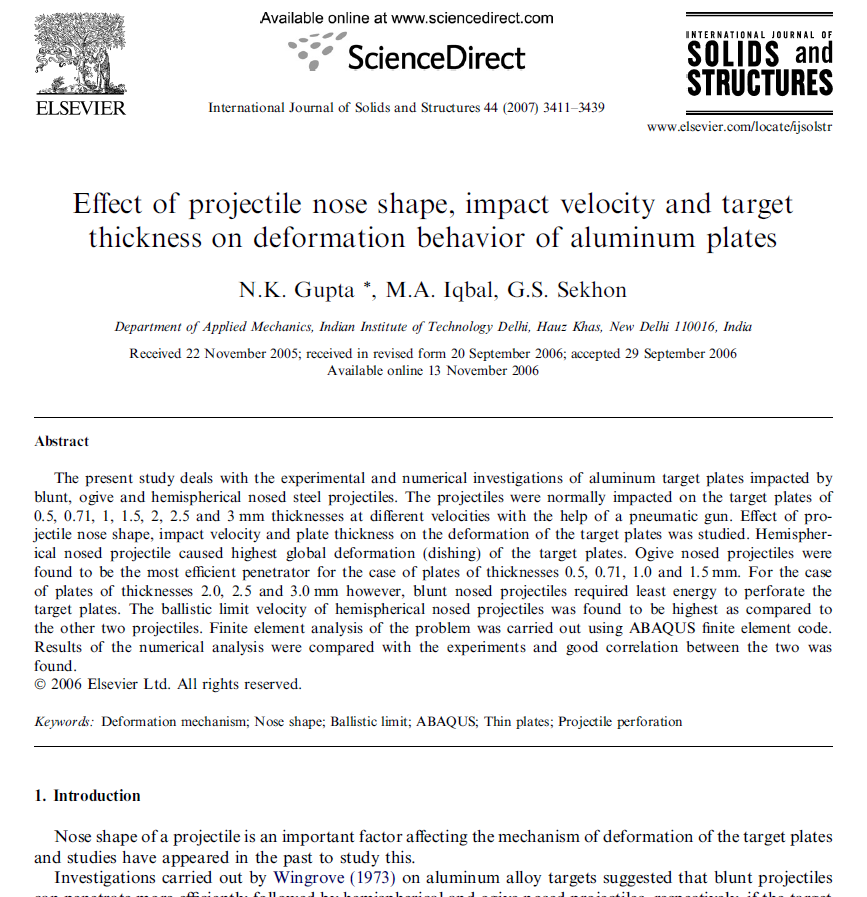
This project is based on the reference research article. The research paper is included with the project files and can be used to review the experimental impact test and the reported results.
Project Information
Important information about this project
Payment & Support
Need help with your purchase?
Secure Payment
Your payment is processed securely through our online payment system.
Need Help?
If you have any questions about this product, please contact us by email.
saeedofmoeini@gmail.com
There are no reviews yet.