
Product Overview
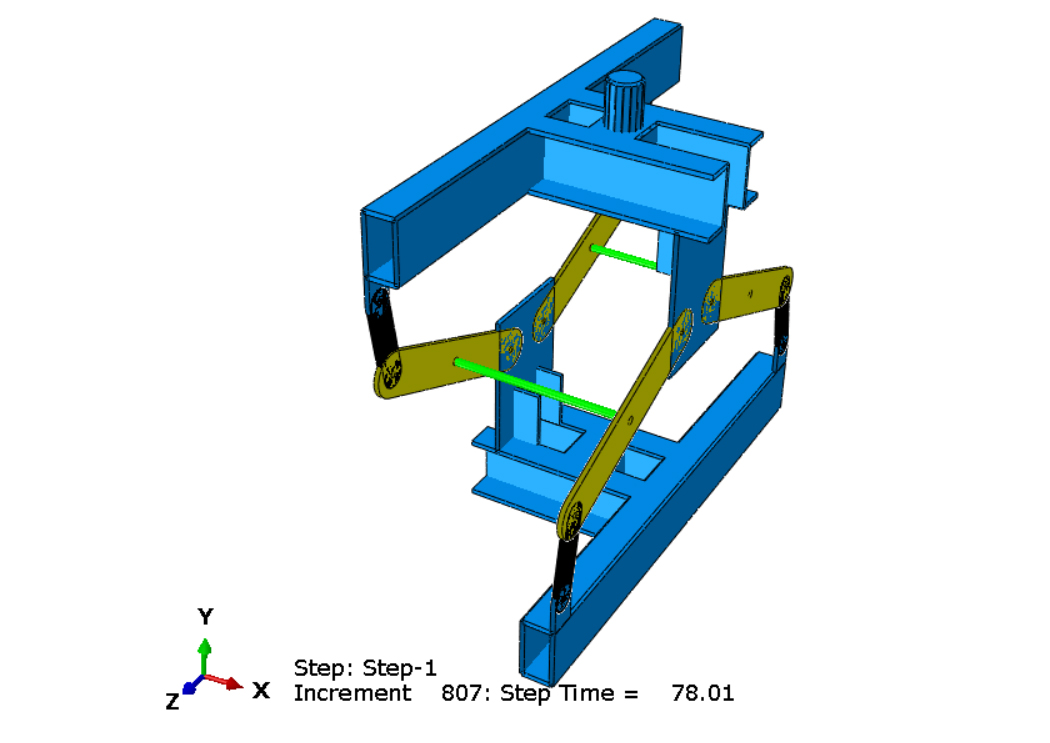
In this example, we intend to simulate a Pure Torsional Yielding Damper under cyclic loading in the Abaqus software.
The damper is designed to dissipate seismic energy through a pure torsional yielding mechanism. Special connection details transfer the story shear force to the damper in a way that produces torsion in the pipe without significant shear force and bending moment in the damper pipe.
The numerical model is developed to investigate the cyclic behavior, deformation, and hysteretic response of the pure torsional yielding damper.
Pure Torsional Yielding Damper
The Pure Torsional Yielding Damper is a metallic energy dissipation device that uses torsional yielding of a steel pipe as its primary energy dissipation mechanism.
The damper is designed so that the story shear force is transferred to the pipe through special connection details, producing pure torsion in the pipe while minimizing the effects of shear force and bending moment.
Under cyclic loading, the pipe wall undergoes distributed yielding and repeated torsional deformation, allowing the damper to dissipate a significant amount of seismic energy.
The pure torsional mechanism also promotes a uniform stress distribution across the pipe wall thickness, which contributes to the stable hysteretic behavior of the damper.
Laboratory and Abaqus Models
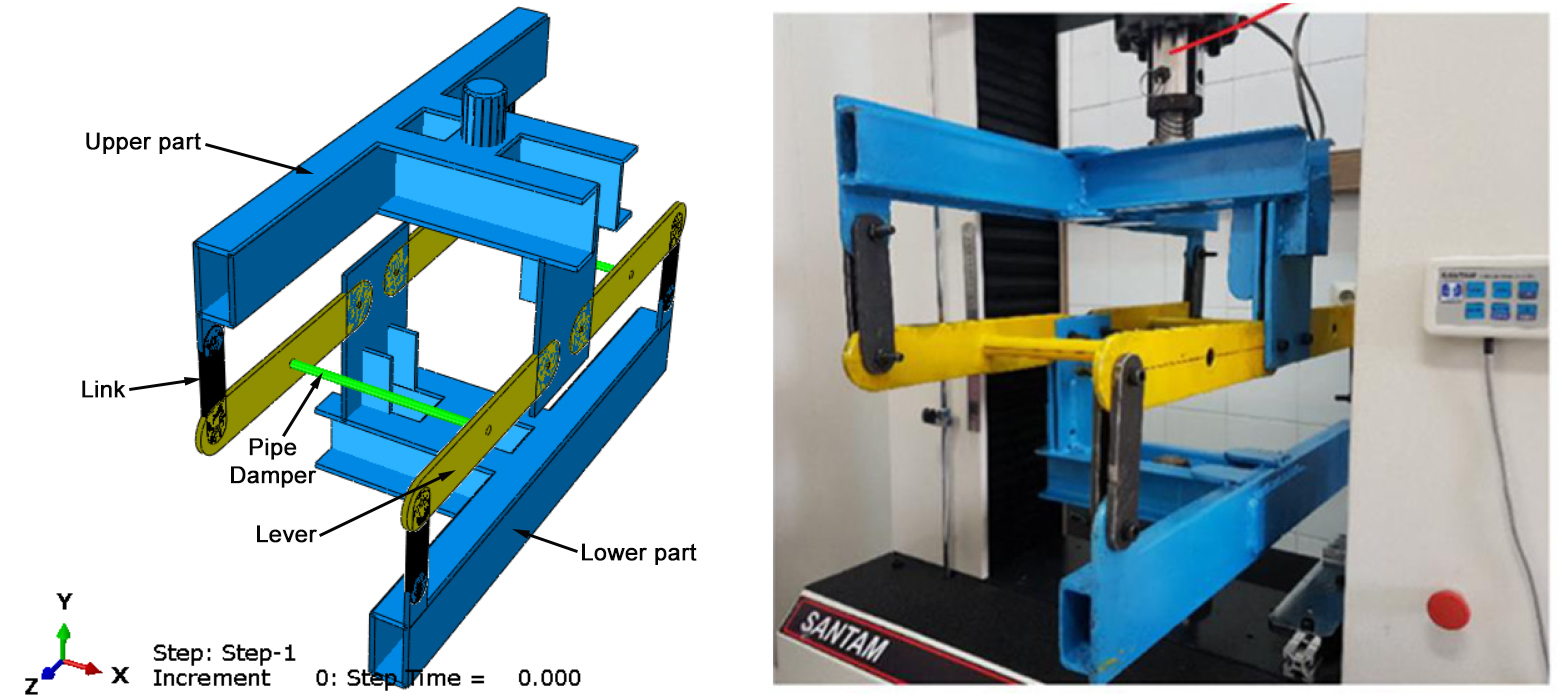
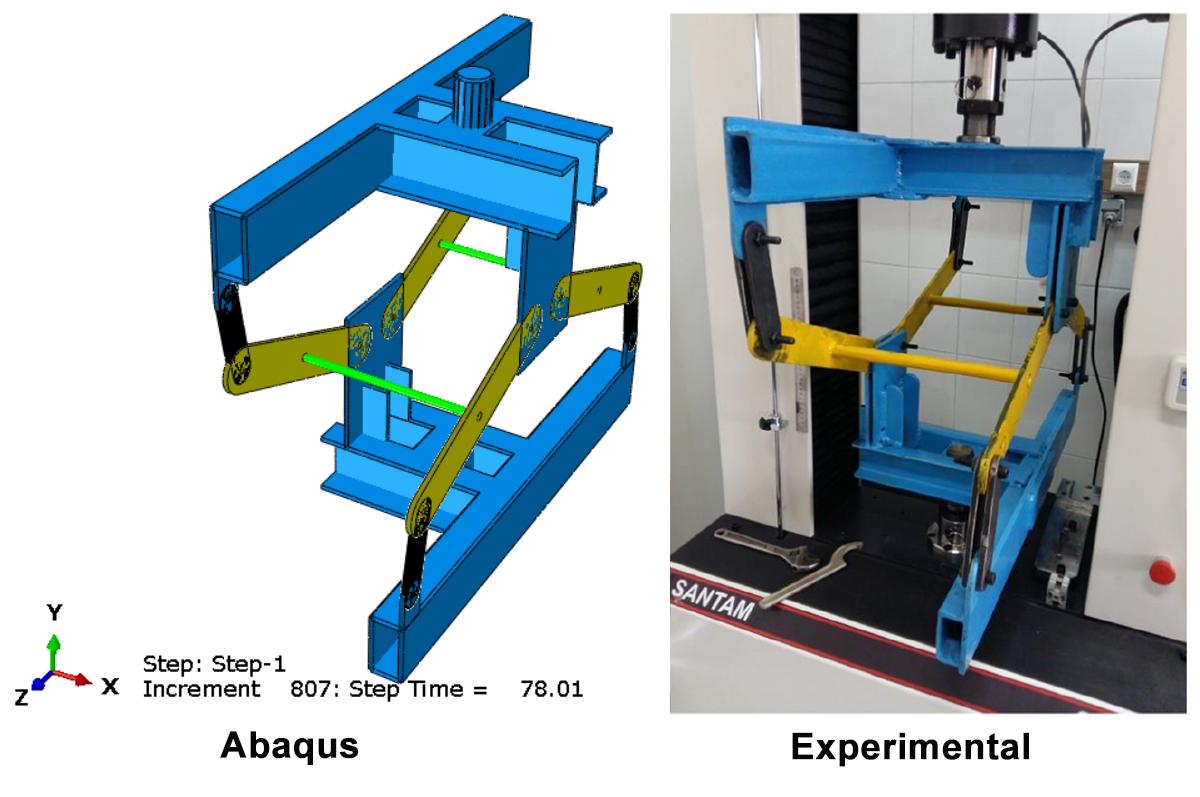
As you observe in the picture, the laboratory model is shown on the right, while the model simulated in the Abaqus software is shown on the left.
Model Components
The numerical model consists of several components that work together to transfer the applied displacement to the torsional damper.
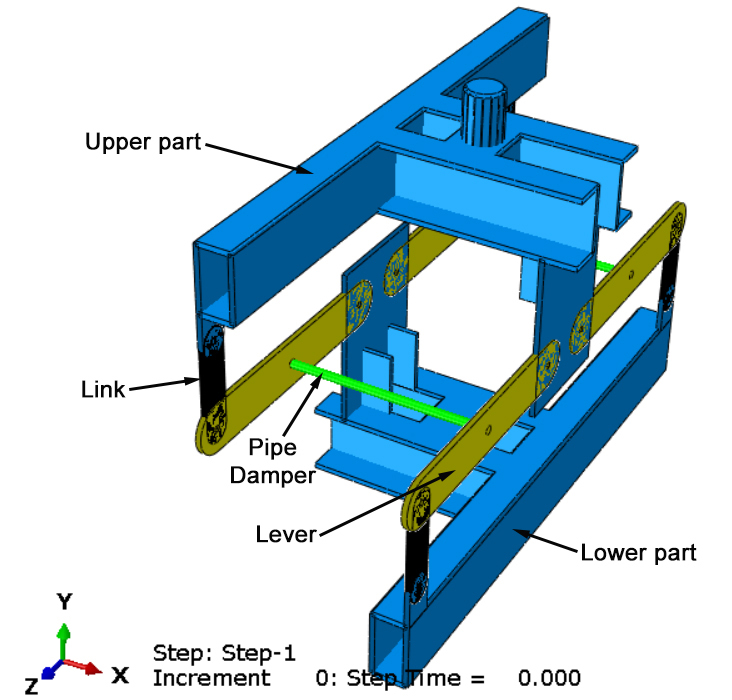
The main components of the model are the Pipe Damper, Levers, Links, Upper Part, and Lower Part.
The Pipe Damper is the main energy-dissipating component, while the levers and links transfer the applied motion to the pipe and generate the required torsional deformation.
Hinges
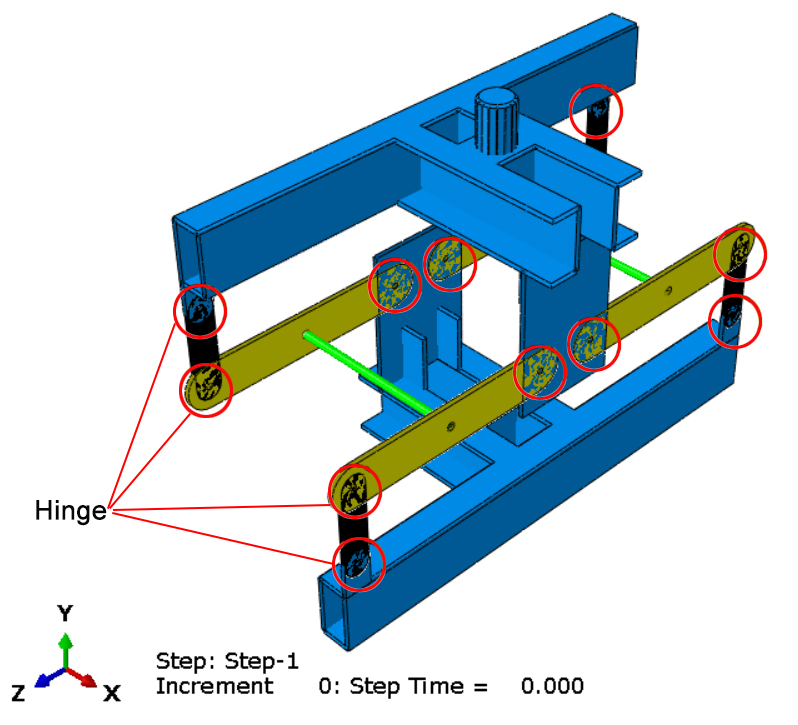
The different components of the model are connected using hinges to allow the required relative rotation between the connected parts.
A total of 12 hinges are used to connect the levers, links, upper part, and lower part of the model.
These hinge connections allow the applied displacement to be transferred through the mechanism and produce the torsional deformation of the pipe damper.
Cyclic Loading
In this problem, cyclic loading is applied to the model to investigate the hysteretic behavior of the pure torsional yielding damper.
The cyclic loading history is defined in Abaqus using the corresponding amplitude data.
Torsional Deformation and Yielding
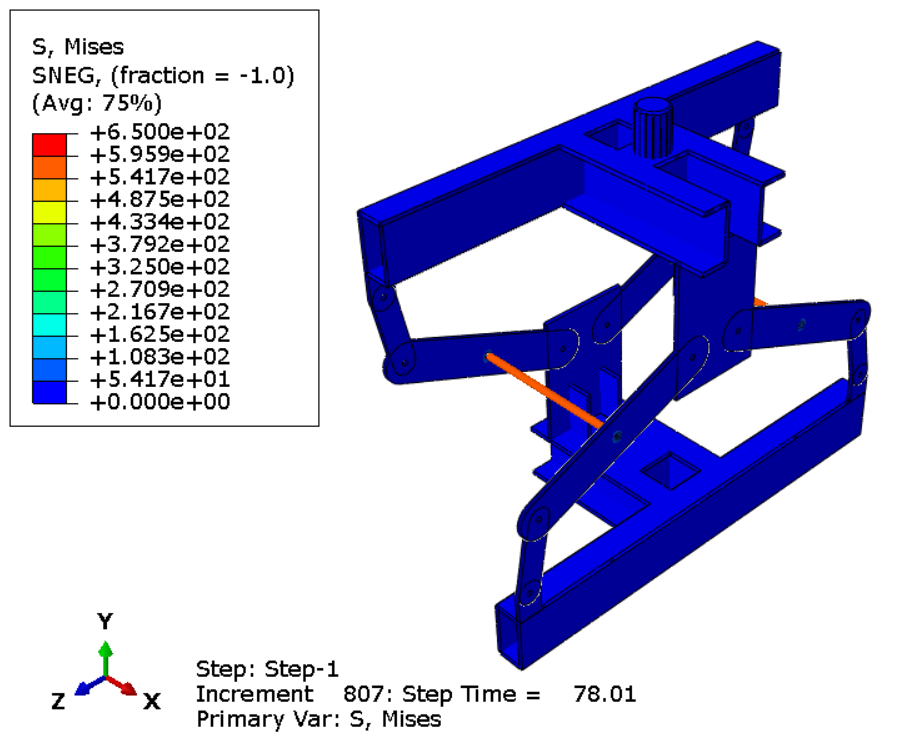
Under cyclic loading, the pipe damper undergoes torsional deformation as the main deformation mechanism of the Pure Torsional Yielding Damper.
As the applied displacement increases, the pipe wall develops distributed yielding under torsion. This allows a large portion of the pipe wall to participate in energy dissipation.
The torsional yielding mechanism produces a relatively uniform stress distribution across the pipe wall thickness, contributing to the stable cyclic behavior of the damper.
The Abaqus results are used to investigate the torsional deformation and yielding behavior of the pipe during cyclic loading.
Force-Displacement Hysteresis Diagram
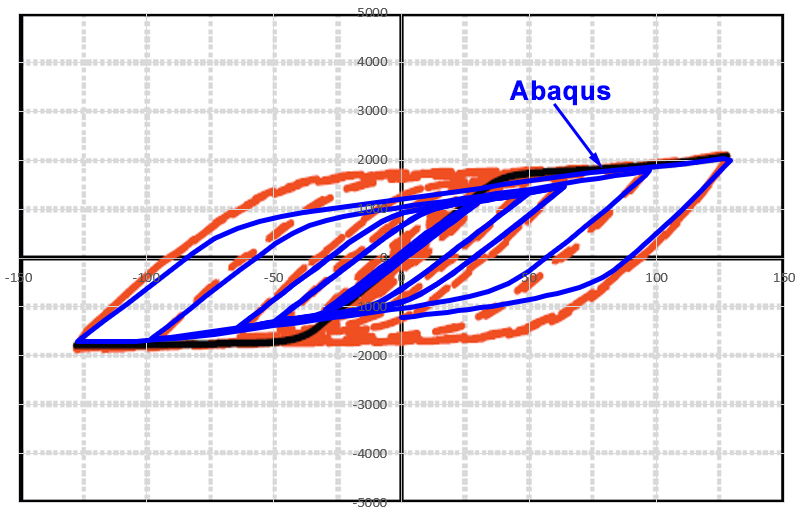
After applying the cyclic loading, the Force-Displacement hysteresis diagram is obtained from the Abaqus results.
As you observe in the picture, the Force-Displacement hysteresis diagram obtained from the Abaqus software is compared with the experimental results.
The damper exhibits stable and well-shaped hysteresis loops under cyclic loading.
After yielding, the strength of the damper increases with increasing displacement due to the combined effects of strain hardening and geometric nonlinearity.
Deformation Comparison
As you observe in the pictures, the deformation obtained from the numerical model is compared with the experimental results.
Deformation Under Cyclic Loading
The deformation of the model under cyclic loading can be observed in the following picture.
Energy Dissipation
The Pure Torsional Yielding Damper dissipates seismic energy through the distributed yielding of the pipe wall under torsional deformation.
The widespread yielding of the pipe wall allows a large portion of the damper material to participate in energy dissipation during cyclic loading.
The resulting stable and well-shaped hysteresis response indicates the energy dissipation behavior of the damper under repeated loading.
The Abaqus results can be used to evaluate the energy dissipation capacity of the Pure Torsional Yielding Damper and compare it with the experimental response.
Validation
This project has been validated, which means that the results obtained from the Abaqus software are similar to the results reported in the reference article.
In other words, this project is based on the reference article, and the numerical model has been developed to reproduce the experimental behavior of the pure torsional yielding damper under cyclic loading.
What You Will Learn
- How to model a pure torsional yielding damper in Abaqus.
- How to model the Pipe Damper, Lever, Link, Upper Part, and Lower Part.
- How to connect different components using hinges.
- How to define 12 hinges in the numerical model.
- How to define the material properties.
- How to define the boundary conditions.
- How to apply cyclic loading.
- How to define the cyclic loading amplitude.
- How to obtain the Displacement-Force hysteresis diagram.
- How to compare the Abaqus hysteresis diagram with experimental results.
- How to investigate the deformation of the model under cyclic loading.
- How to compare numerical deformation with experimental results.
- How to validate the numerical model using the reference article.
Key Features
- Pure Torsional Yielding Damper modeling in Abaqus.
- Pipe Damper, Lever, Link, Upper Part, and Lower Part modeling.
- Hinge connection modeling.
- 12 hinges used to connect the model components.
- Cyclic loading analysis.
- Displacement-Force hysteresis analysis.
- Comparison between Abaqus and experimental hysteresis results.
- Comparison of numerical and experimental deformation.
- Validation against the reference article.
- Complete Abaqus CAE file.
- Abaqus INP file.
- Excel file (Amplitude Loading).
- Excel file (Results).
- Reference research paper.
- Step-by-step video tutorial.
Reference
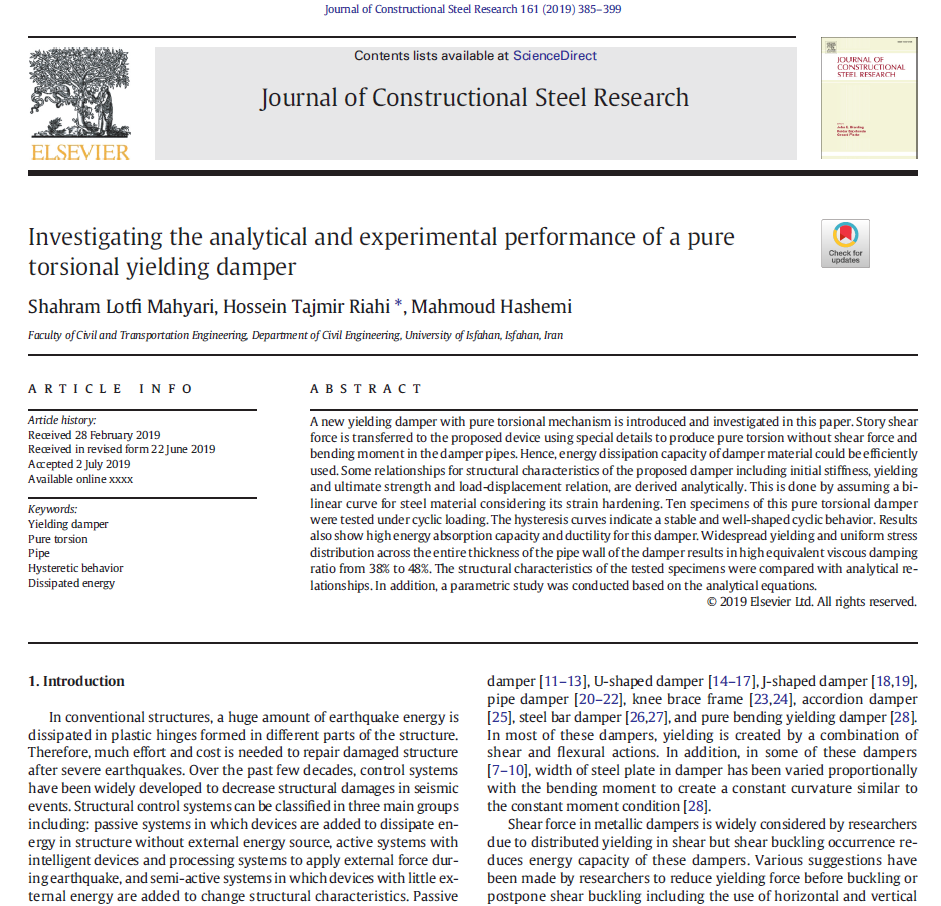
This project is based on the reference research article. The paper is included with the project files and can be used to review the experimental model, cyclic loading protocol, and reported results.
Project Information
Important information about this project
Payment & Support
Need help with your purchase?
Secure Payment
Your payment is processed securely through our online payment system.
Need Help?
If you have any questions about this product, please contact us by email.
saeedofmoeini@gmail.com
There are no reviews yet.