
Product Overview
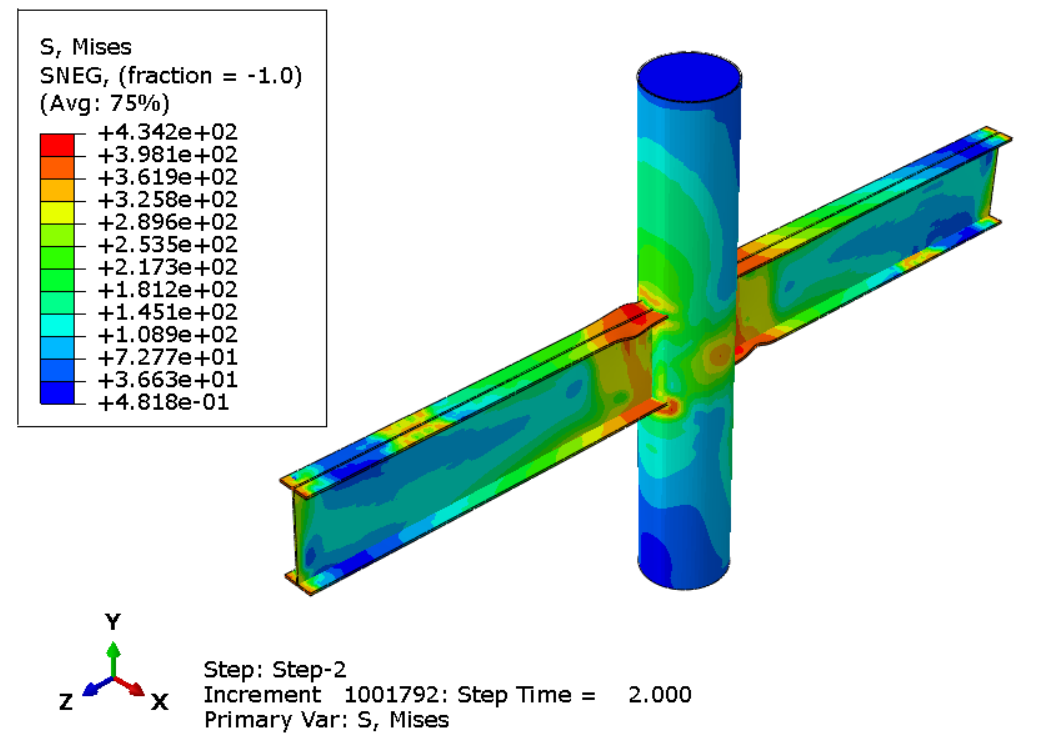
In this project, the behavior of a steel beam-to-concrete-filled tube (CFT) column connection is simulated in the Abaqus software.
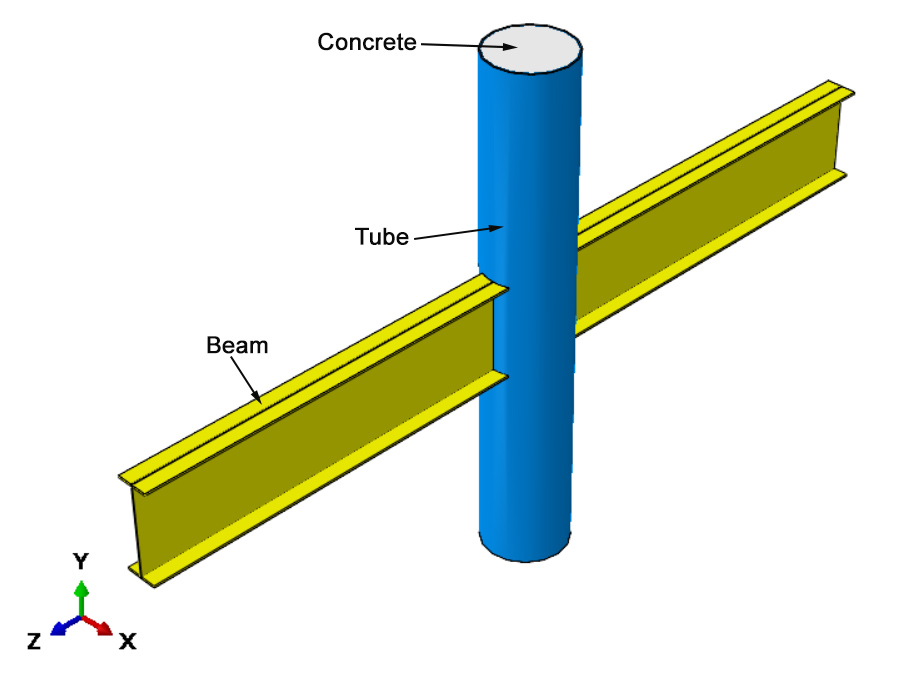
The steel tube is filled with concrete to form a concrete-filled steel tube (CFT) column.
The numerical model is developed to investigate the structural behavior of the connection between a steel beam and a concrete-filled steel tube column under the applied loading.
Model Description
The numerical model represents the NSF5 test specimen, consisting of a W18×35 steel beam passing through a circular concrete-filled steel tube (CFT) column.The beam is connected to the steel tube using a full-penetration weld.
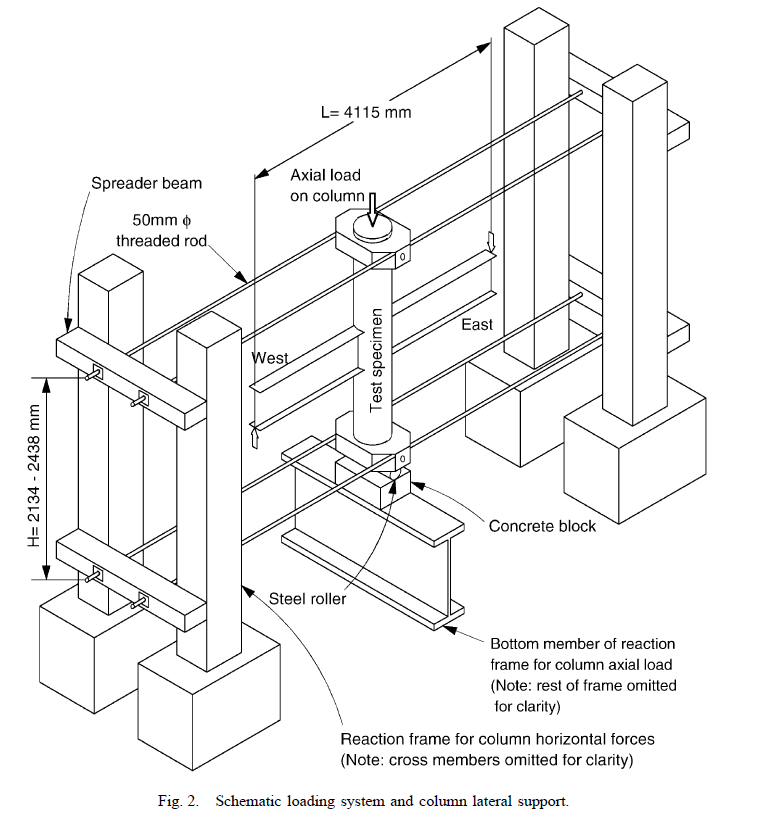
The connection model is subjected to a constant axial load of 1512 kN applied to the CFT column. Vertical loading is then applied at the two beam ends to reproduce the loading configuration of the NSF5 experimental specimen.
The column ends are restrained against horizontal movement while allowing rotation in the plane of the frame. The beam is also laterally restrained to prevent lateral-torsional buckling during the analysis.
Equal and opposite vertical loads were applied at the beam ends to reproduce the loading configuration of the experimental test.
The numerical model is developed according to the configuration of the experimental specimen reported in the reference article.
Concrete Material – CDP Model
In this project, the Concrete Damaged Plasticity (CDP) model available in Abaqus is used to define the nonlinear behavior of the concrete inside the steel tube.
The CDP model accounts for the behavior of concrete under both compression and tension, including compressive crushing and tensile cracking.
The compressive and tensile behavior of concrete are defined using the corresponding stress–strain relationships, while the damage parameters are used to describe the degradation of concrete stiffness.
Compressive Damage of Concrete
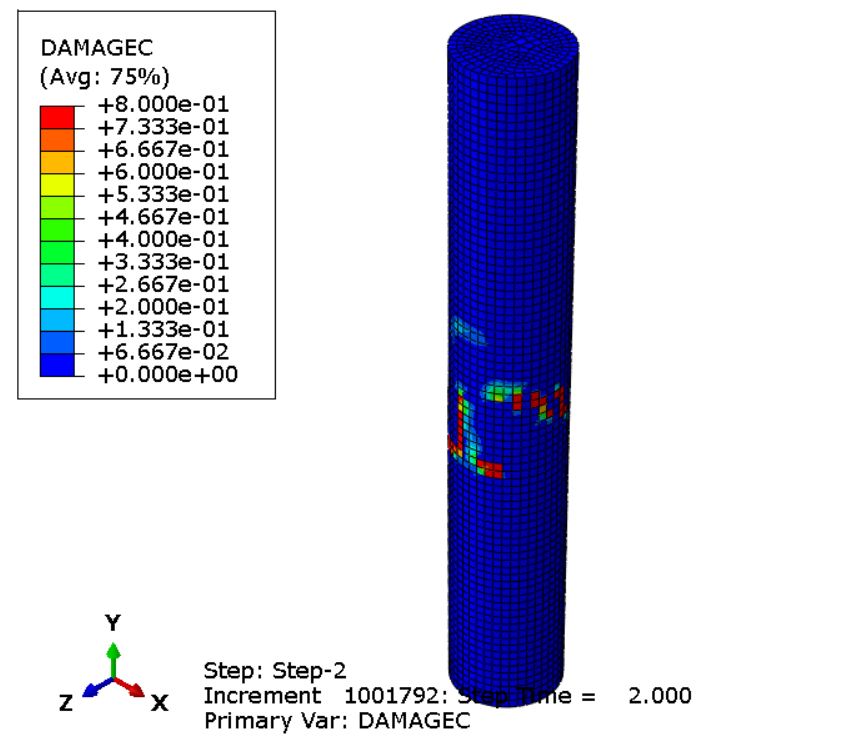
The compressive damage of the concrete is also investigated using the Concrete Damaged Plasticity model in Abaqus.
As you observe in the picture, compressive damage has developed in the concrete core due to the applied loading.
The compressive damage parameter is used to evaluate the degradation of the concrete under compression and to identify the damaged regions within the concrete core.
Steel–Concrete Interaction
The interaction between the steel tube and the concrete core is defined using a surface-to-surface contact formulation in Abaqus. A friction coefficient of 0.3 is assigned to the steel–concrete interface, consistent with the value reported in the reference finite element study.
Force–Deflection Diagram
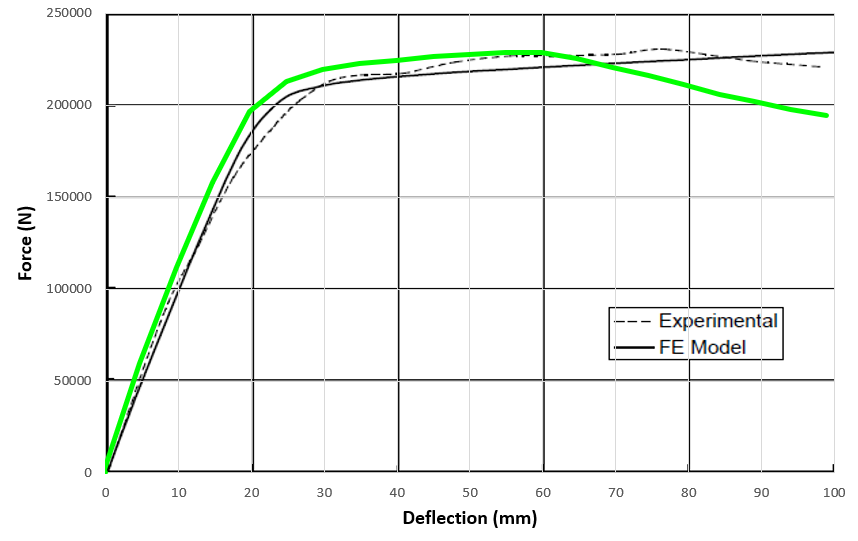
The Force–Deflection diagram is obtained from the Abaqus analysis to evaluate the structural response of the steel beam-to-CFT column connection.
The numerical results obtained from Abaqus are compared with the experimental results reported in the reference article.
Comparison of Abaqus and Experimental Results
As shown in the figure, the Abaqus results are compared with the experimental results reported in the reference article.
The numerical and experimental Force–Deflection curves show good agreement, demonstrating that the Abaqus model can appropriately reproduce the behavior of the tested connection.
Deformation and Buckling of the Beam
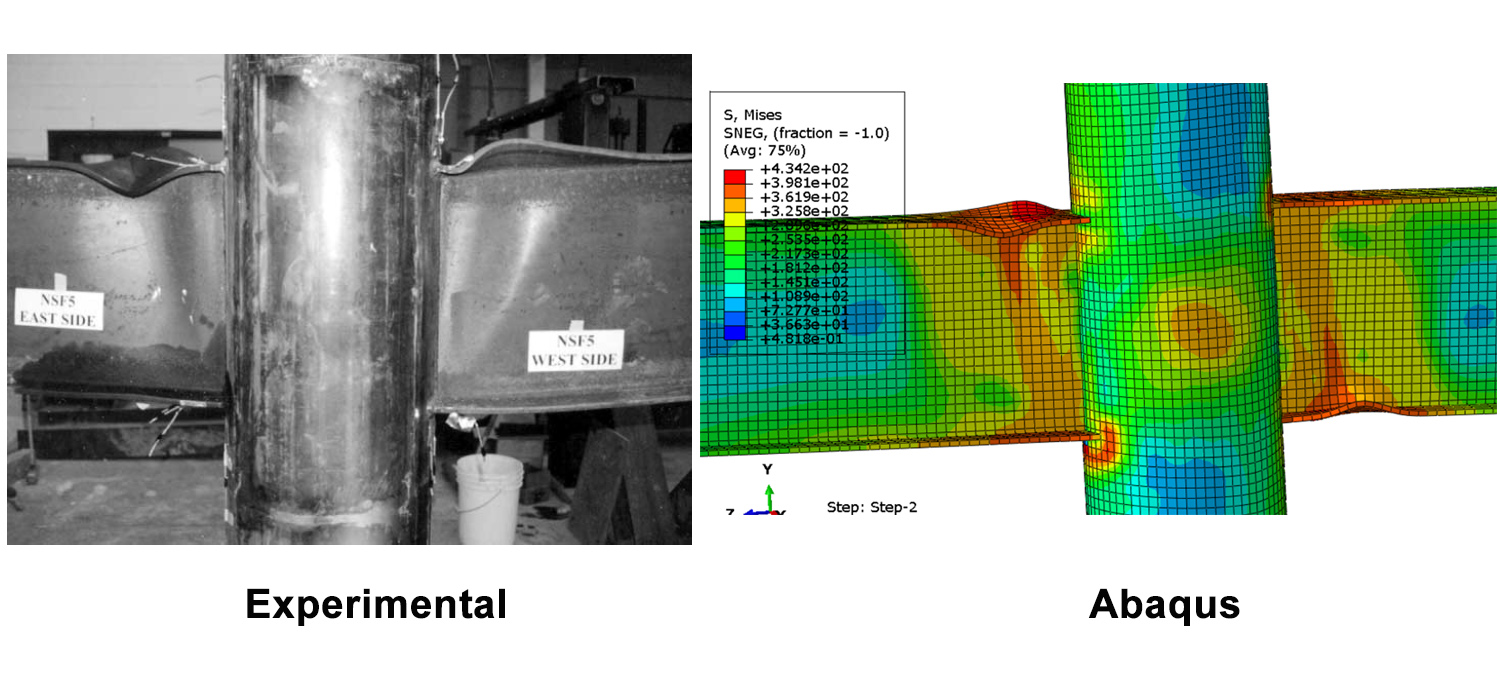
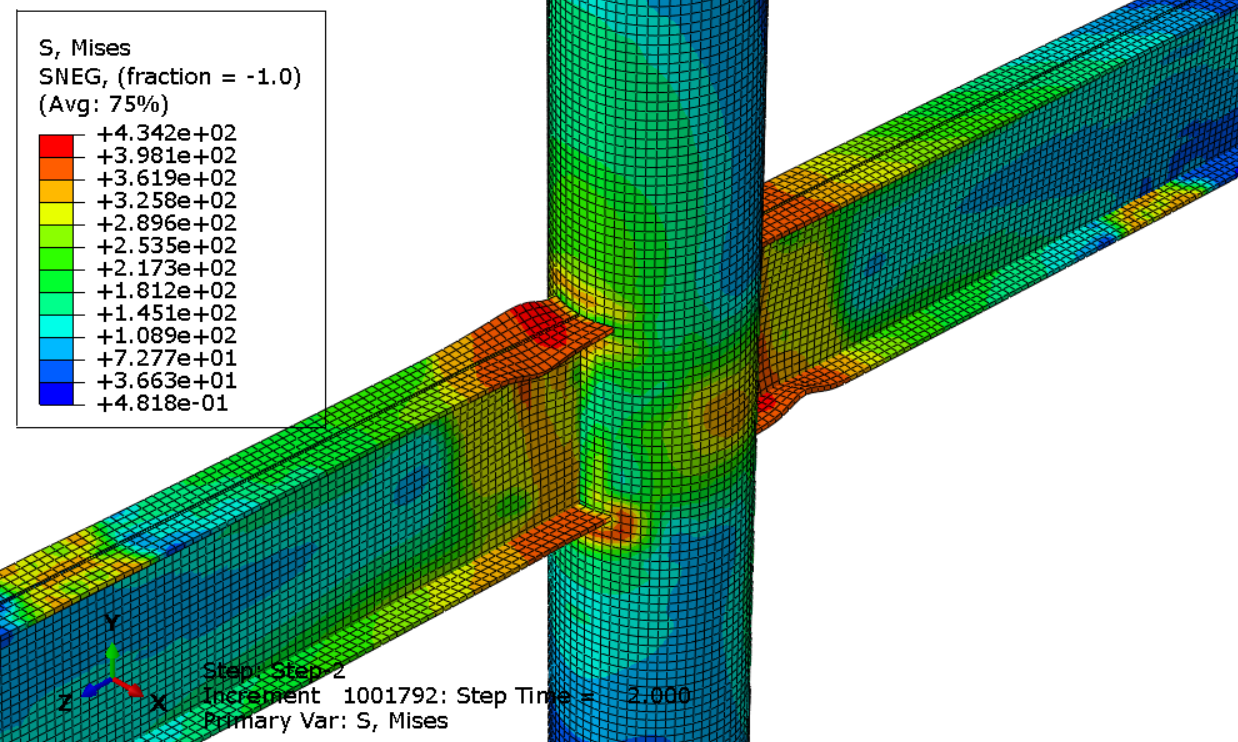
The deformation response of the NSF5 connection is mainly concentrated in the steel beam outside the connection region. As the applied load increases, significant plastic deformation develops in the beam, followed by local buckling of the beam flanges and web. This behavior indicates that the beam develops the main inelastic response while the CFT column remains relatively undamaged.
Numerical Results
The results obtained from the Abaqus analysis are used to investigate the behavior of the steel beam-to-CFT column connection.
The deformation, stress distribution, concrete damage, and response of the connection can be investigated from the Abaqus results.
Validation
This project has been validated by comparing the results obtained from Abaqus with the results reported in the reference article.
The good agreement between the numerical and experimental results demonstrates that the Abaqus model can reproduce the behavior of the steel beam-to-CFT column connection.
Key Features
- Steel beam-to-concrete-filled tube (CFT) column connection.
- Nonlinear finite element analysis in Abaqus.
- Concrete modeled using the Concrete Damaged Plasticity (CDP) model.
- Concrete tensile cracking and compressive crushing behavior.
- Investigation of concrete compressive damage.
- Steel–concrete interaction.
- Investigation of the composite behavior of the CFT column.
- Force–deflection diagram obtained from Abaqus.
- Comparison between Abaqus and experimental force–displacement results.
- Buckling of the beam web and flange.
- Investigation of deformation and stress distribution.
- Validated Abaqus model.
- Complete Abaqus CAE and INP files.
- Excel results file.
- Reference research paper.
- Step-by-step video tutorial.
What You Will Learn
- How to model a steel beam-to-CFT column connection in Abaqus.
- How to model the steel beam and concrete-filled tube column.
- How to define the nonlinear behavior of concrete using the Concrete Damaged Plasticity (CDP) model.
- How to define the tensile and compressive behavior of concrete.
- How to model the interaction between the steel tube and concrete core.
- How to define the material properties of steel and concrete.
- How to apply the loading and boundary conditions.
- How to perform nonlinear analysis of the connection.
- How to investigate concrete compressive damage.
- How to investigate the deformation and buckling of the beam.
- How to obtain the force–deflection response from Abaqus.
- How to compare Abaqus results with experimental results.
- How to validate an Abaqus model using experimental results.
Reference
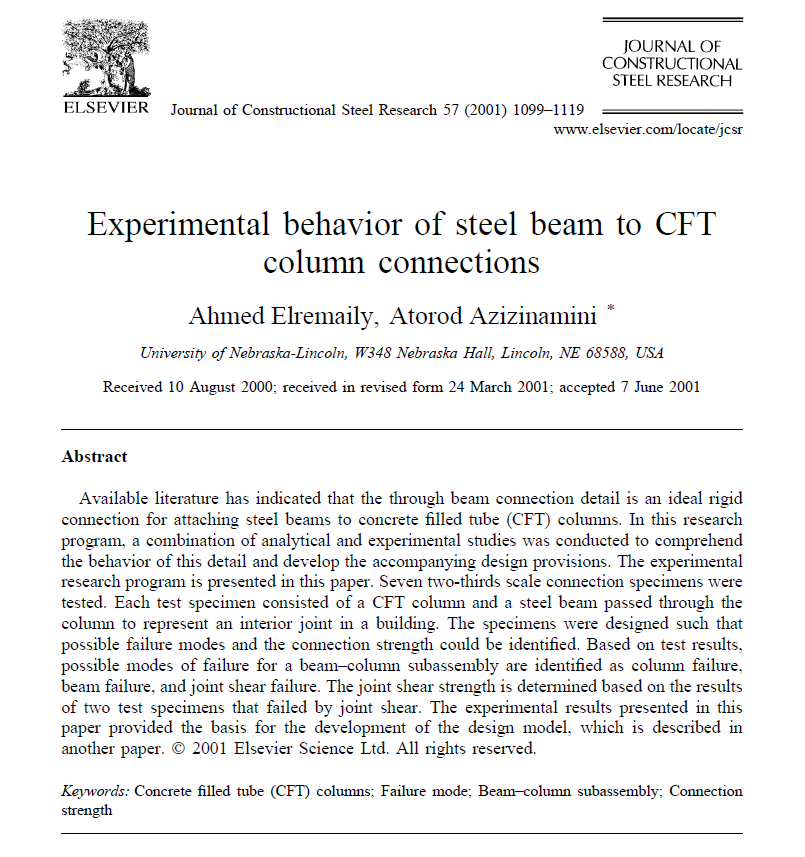
This project is based on the reference research article used for experimental validation. The paper is included with the project files and can be used to review the experimental setup, material properties, loading procedure, and reported results.
Project Information
Important information about this project
Payment & Support
Need help with your purchase?
Secure Payment
Your payment is processed securely through our online payment system.
Need Help?
If you have any questions about this product, please contact us by email.
saeedofmoeini@gmail.com
There are no reviews yet.