
Product Overview
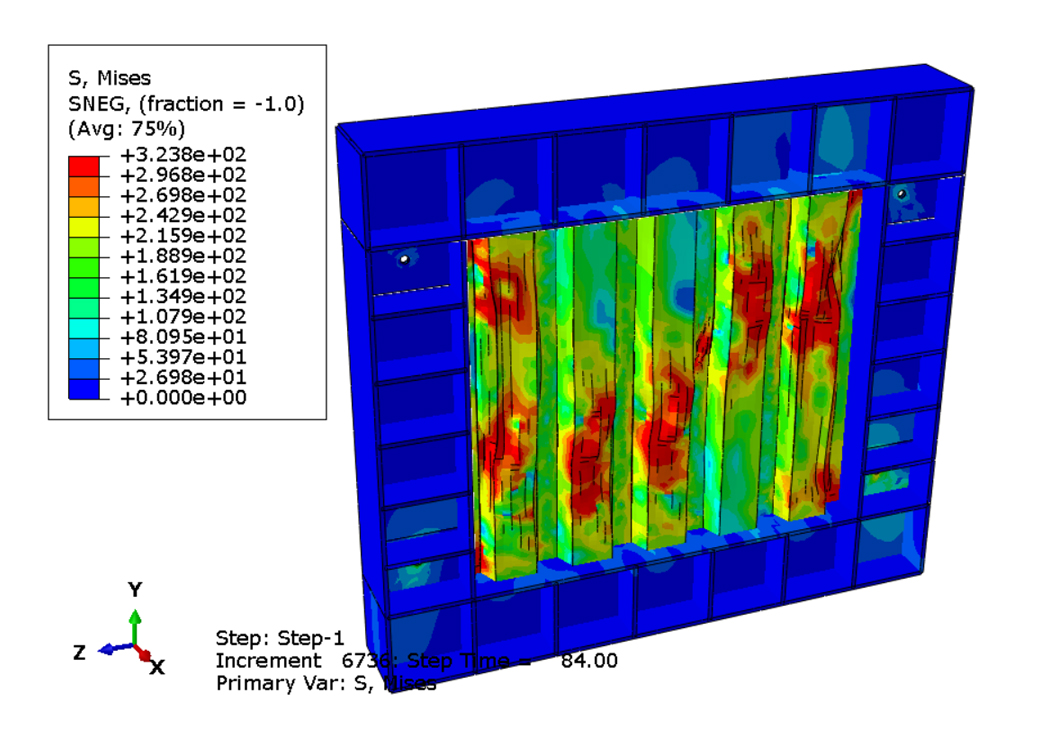
In this project, a double-corrugated steel plate shear wall is modeled in Abaqus and its behavior under cyclic loading is investigated. The numerical model is developed based on the experimental study reported in the reference paper.
In this project, the L-DCSP3 specimen from the reference experimental study is modeled and simulated in Abaqus.The numerical model is used to investigate the structural response of the shear wall under cyclic loading and to compare the numerical hysteresis response with the laboratory results.
Model Description
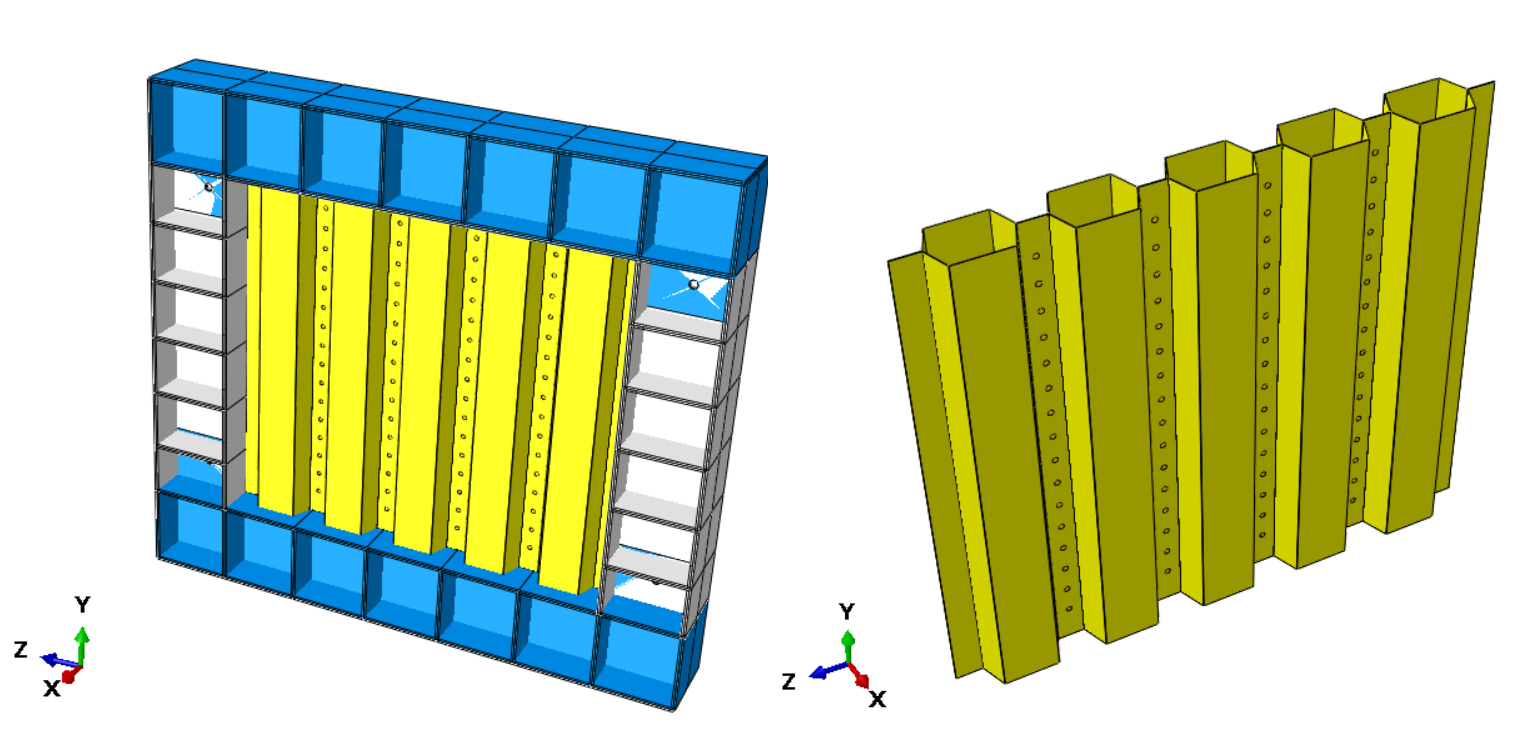
The model represents a double-corrugated steel plate shear wall based on the configuration used in the reference experimental study.
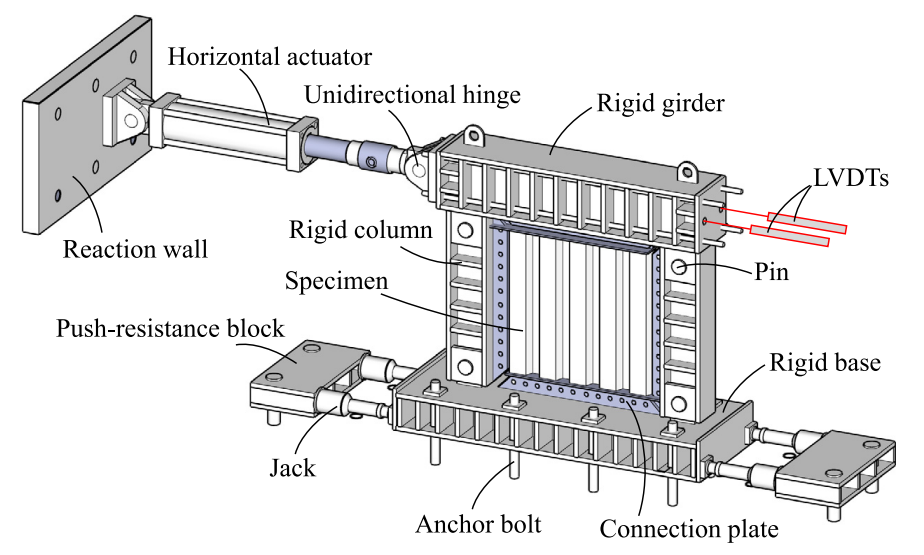
Two corrugated steel plates are assembled together using bolts to form the shear wall system. The beam and column are also modeled as part of the structural system, with their connection represented by hinges according to the experimental configuration.
The required material properties, interactions, boundary conditions, and analysis settings are defined in Abaqus to reproduce the behavior of the experimental specimen.
Buckling Analysis and Initial Imperfection
A buckling analysis is first performed to investigate the buckling behavior of the double-corrugated steel plate shear wall.
The first buckling mode obtained from the analysis is then used to define an initial geometric imperfection in the structural model. Introducing the initial imperfection helps the numerical model reproduce the initial geometric irregularities and buckling behavior of the experimental specimen.
Structural Connections
The two single-corrugated steel plates are connected together at the valley regions using high-strength bolts, representing the connection used in the experimental specimen. The interface between the two plates is modeled using surface-to-surface contact.
The frame is modeled with a very high stiffness to represent rigid behavior and is used to provide the required boundary conditions. The four beam-to-column connections are modeled using hinge connectors to eliminate the lateral resistance contribution of the frame.
Cyclic Loading
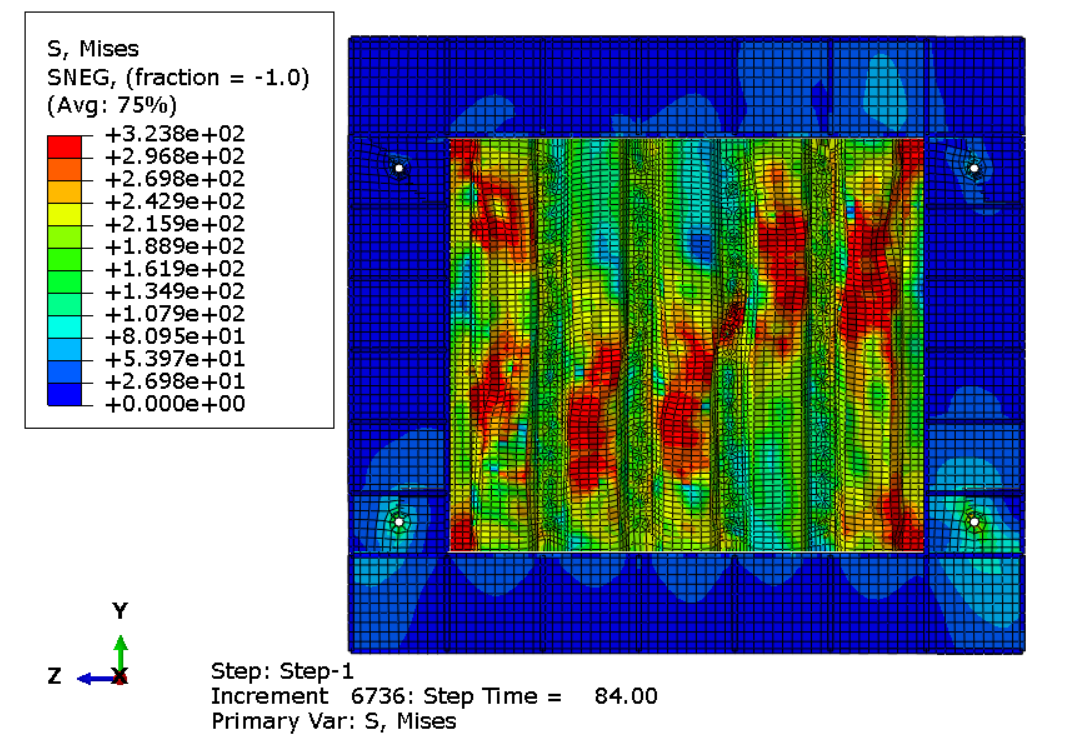
After the buckling analysis, the shear wall is subjected to cyclic loading applied at the top of the structure.
The loading history is defined according to the loading protocol used in the reference experimental study. Repeated loading and unloading cycles are applied to investigate the nonlinear cyclic response of the shear wall.
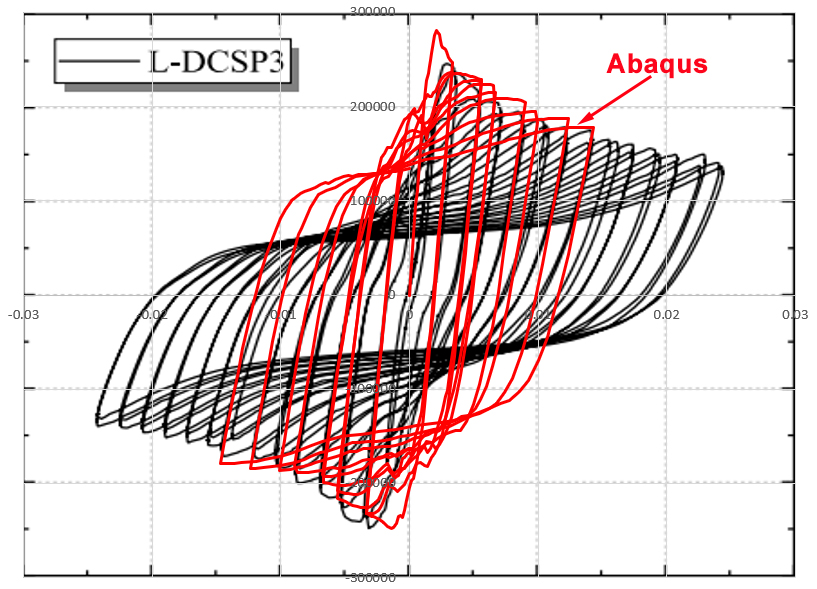
The resulting structural response is used to obtain the Force–Rotation hysteresis curve.
Results and Hysteresis Response
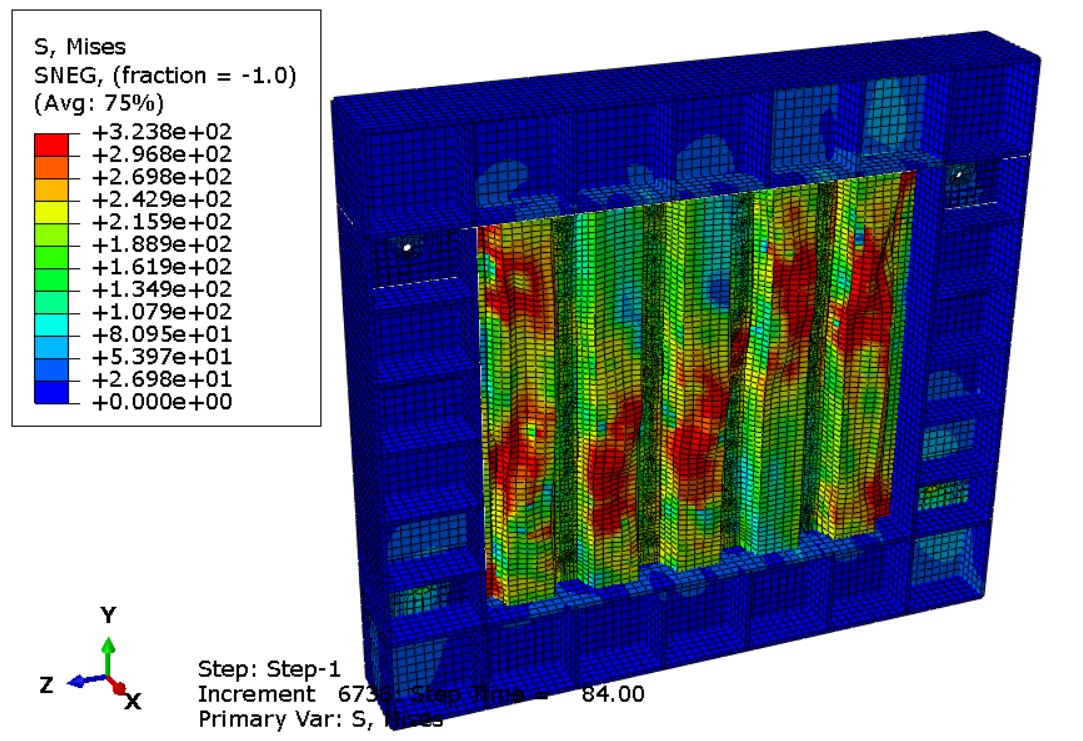
The Abaqus results are extracted and processed to evaluate the structural response of the double-corrugated steel plate shear wall under cyclic loading.
The Force–Rotation hysteresis curve obtained from the numerical model is compared with the corresponding laboratory results reported in the reference study.
Deformation Under Cyclic Loading
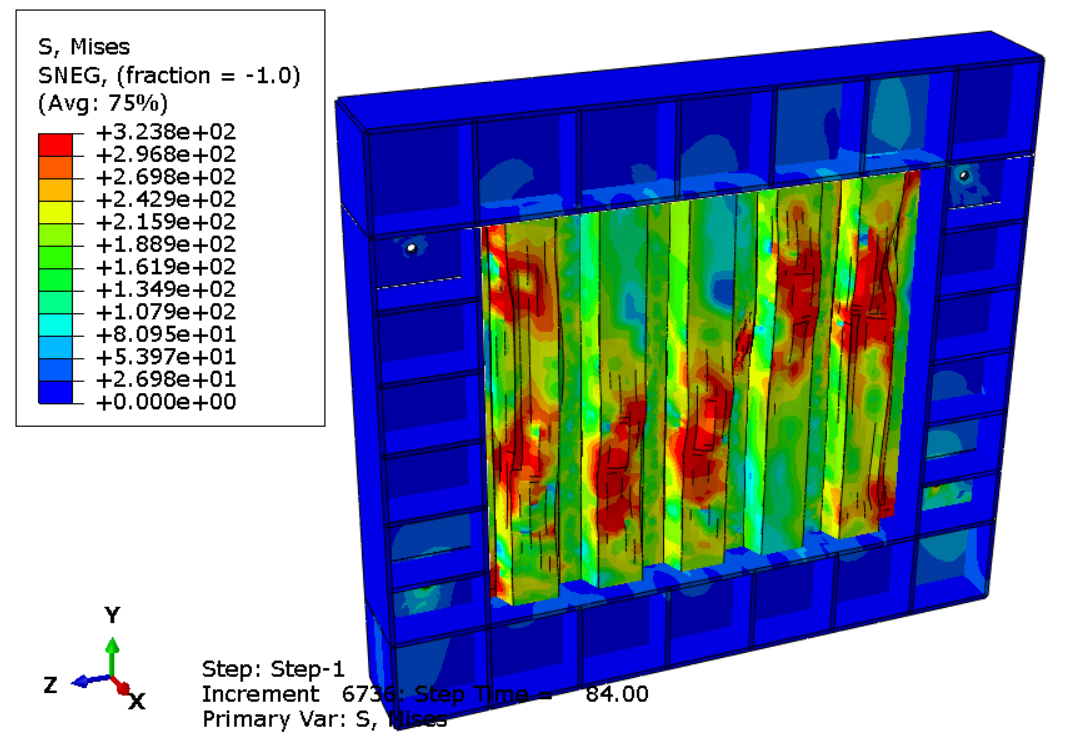
The deformation behavior of the steel shear wall is investigated throughout the cyclic analysis. The Abaqus results show the deformation of the corrugated steel plates under repeated loading.
Experimental Validation
The numerical results are compared with the laboratory results reported in the reference research paper.
The comparison focuses on the Force–Rotation hysteresis response and the overall structural behavior under cyclic loading. The numerical results show good agreement with the laboratory results.
Key Features
- Double-corrugated steel plate shear wall.
- Bolted connection between the two corrugated steel plates.
- Buckling analysis and initial geometric imperfection.
- Hinged beam-to-column connections.
- Nonlinear analysis under cyclic loading.
- Force–Rotation hysteresis response.
- Investigation of deformation under cyclic loading.
- Comparison with laboratory results.
- Complete Abaqus model files.
- Excel files for cyclic loading and numerical results.
- Step-by-step video tutorial.
What You Will Learn
- How to model a double-corrugated steel plate shear wall in Abaqus.
- How to define the geometry and material properties of the steel components.
- How to model two corrugated steel plates connected by bolts.
- How to define the connection between the structural components.
- How to perform a buckling analysis.
- How to use a buckling mode to define an initial imperfection.
- How to model hinged beam-to-column connections.
- How to define cyclic loading in Abaqus.
- How to perform nonlinear analysis under cyclic loading.
- How to obtain a Force–Rotation hysteresis curve.
- How to extract and process Abaqus results using Excel.
- How to compare numerical and laboratory results.
Reference
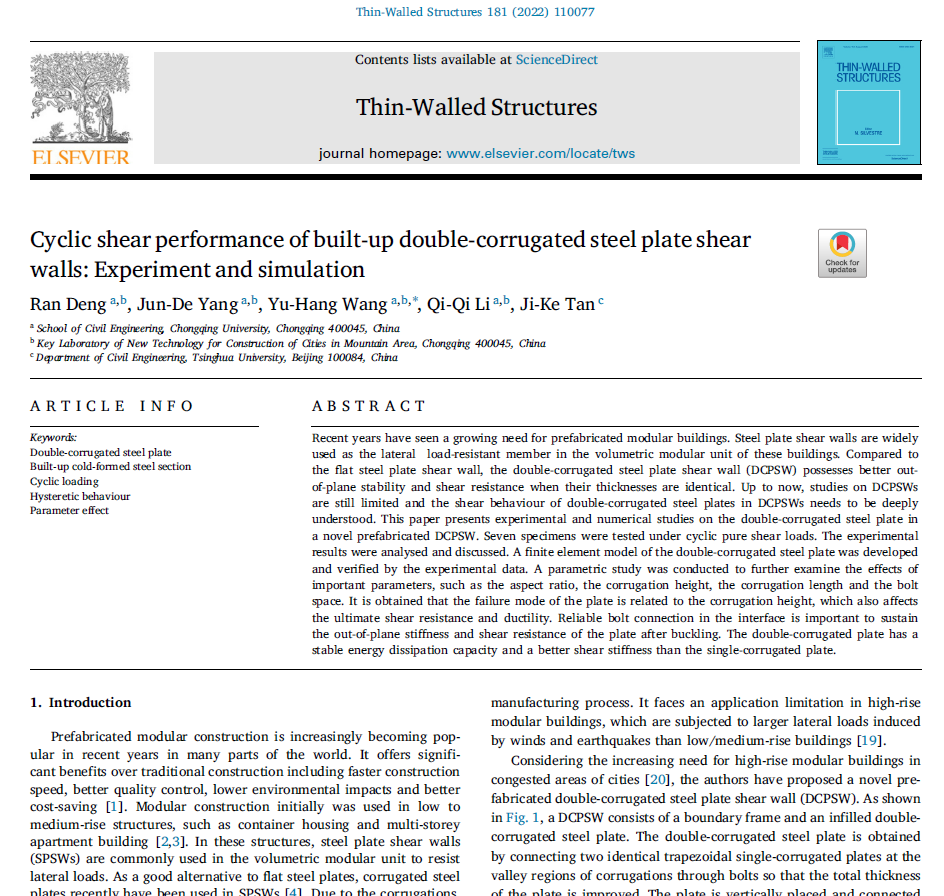
This project is based on the experimental research study used to investigate the behavior of a double-corrugated steel plate shear wall under cyclic loading. The reference paper is included with the project files and can be used to review the experimental setup, loading protocol, and reported results.
Project Information
Important information about this project
Payment & Support
Need help with your purchase?
Secure Payment
Your payment is processed securely through our online payment system.
Need Help?
If you have any questions about this product, please contact us by email.
saeedofmoeini@gmail.com
There are no reviews yet.