
Product Overview
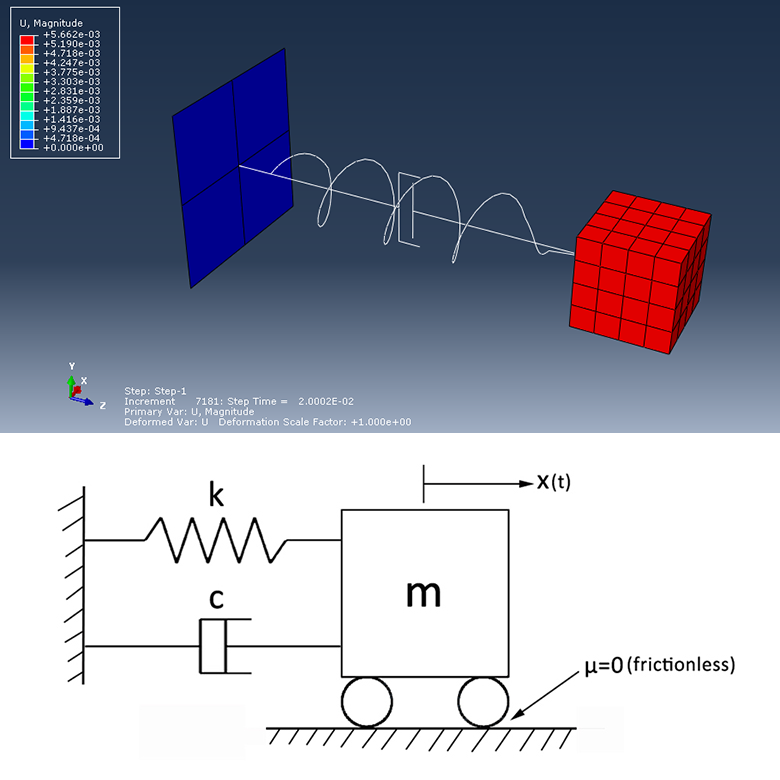
In this example, we intend to simulate the free vibration of a single degree of freedom mass-spring-damper system using the Abaqus software.
The equation of motion of the single degree of freedom system is obtained using both the Abaqus software and the exact analytical solution. The results obtained from Abaqus are then compared with the corresponding analytical results.
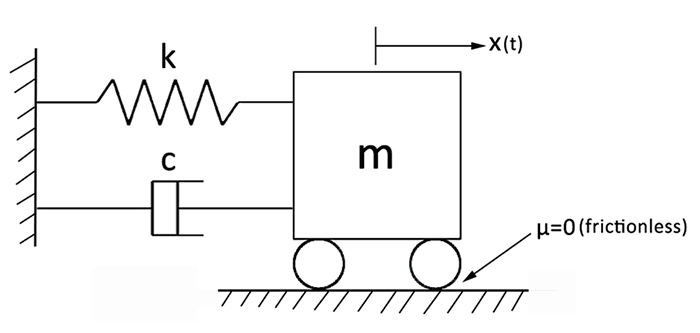
Equation of Motion
The equation of motion of a single degree of freedom mass-spring-damper system is derived based on the mass, stiffness, and damping properties of the system.
The dynamic response of the system depends on the damping ratio. Based on the value of the damping ratio, the system can exhibit oscillatory or non-oscillatory behavior.
Abaqus Simulation
Two separate Abaqus models are provided for the underdamped and overdamped conditions.
The required mass, spring, and damping properties are defined in Abaqus, and the dynamic response of each system is obtained.
Underdamped System (ζ < 1)
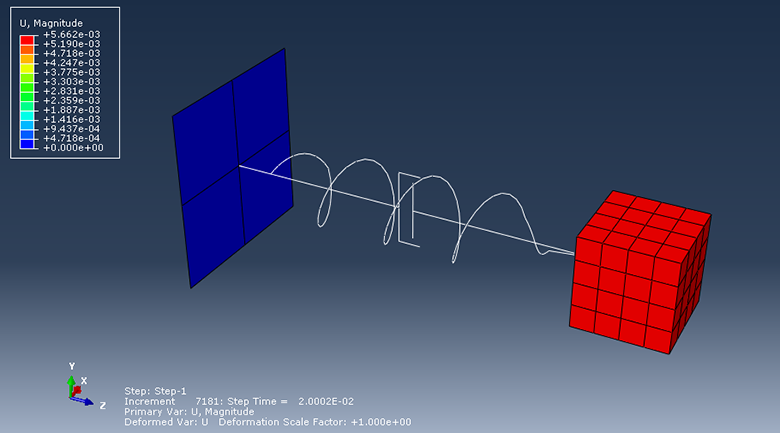
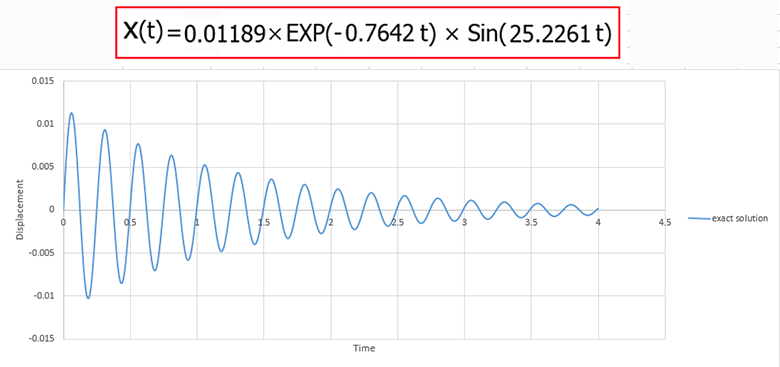
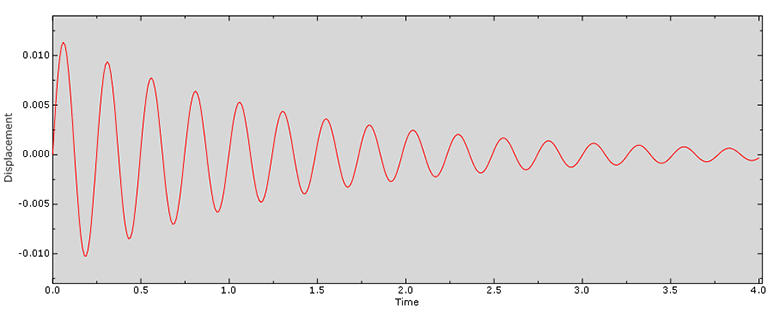
When the damping ratio ζ is smaller than 1, the system is called underdamped. In this condition, the system exhibits an oscillatory motion while the amplitude of vibration gradually decreases with time because of damping.
In this project, the underdamped system is modeled in Abaqus and its dynamic response is compared with the corresponding exact analytical solution.

Overdamped System (ζ > 1)
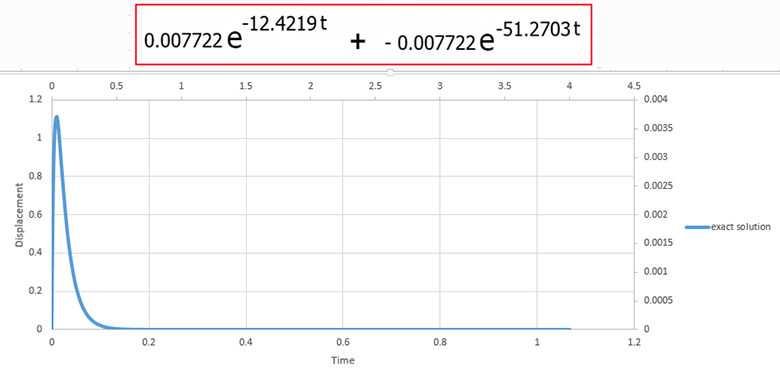
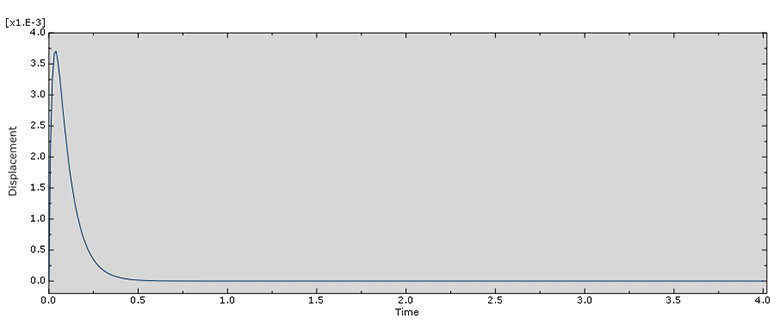
When the damping ratio ζ is greater than 1, the system is called overdamped. In this condition, the system does not exhibit oscillatory motion and returns to its equilibrium position without oscillating.
The overdamped system is also simulated in Abaqus and its numerical response is compared with the exact analytical solution.

Exact Analytical Solution
In addition to the numerical simulation, the equation of motion is solved using the exact analytical solution.
Separate analytical solutions are obtained for the underdamped and overdamped conditions. These solutions provide reference results for evaluating the accuracy of the Abaqus simulations.
Abaqus Validation
The underdamped and overdamped systems are solved independently using the exact analytical formulations, and the same systems are simulated in Abaqus.
The numerical results obtained from Abaqus are then compared with the corresponding analytical results. The agreement between the two approaches verifies the accuracy of the Abaqus models.
Comparison of Results
The dynamic responses obtained from Abaqus are compared with the exact analytical solutions for both damping conditions.
The comparison demonstrates the ability of Abaqus to accurately reproduce the response of the single degree of freedom mass-spring-damper system under both underdamped and overdamped conditions.
What You Will Learn
- How to model a single degree of freedom mass-spring-damper system in Abaqus.
- How to obtain the equation of motion of the system.
- How to define mass, stiffness, and damping properties in Abaqus.
- How to simulate free vibration in Abaqus.
- How to model an underdamped system (ζ < 1).
- How to model an overdamped system (ζ > 1).
- How to obtain the exact analytical solution.
- How to compare Abaqus results with analytical results.
- How to verify an Abaqus model using an exact analytical solution.
Key Features
- Free vibration analysis of a single degree of freedom system.
- Mass-spring-damper system.
- Underdamped condition (ζ < 1).
- Overdamped condition (ζ > 1).
- Equation of motion calculation.
- Exact analytical solution.
- Two Abaqus CAE models.
- Two Abaqus INP files.
- Comparison of Abaqus and analytical results.
- Analytical validation of the numerical models.
Project Information
Important information about this project
Payment & Support
Need help with your purchase?
Secure Payment
Your payment is processed securely through our online payment system.
Need Help?
If you have any questions about this product, please contact us by email.
saeedofmoeini@gmail.com
There are no reviews yet.