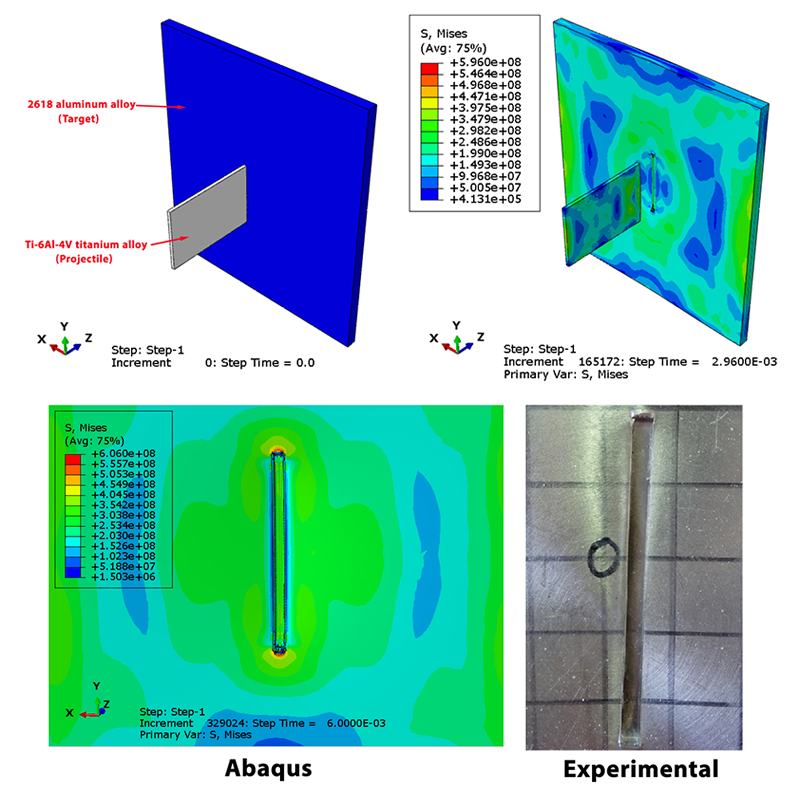
In this example, we intend to simulate the
high-velocity impact of a titanium projectile on an aluminum plate
using the Abaqus software.
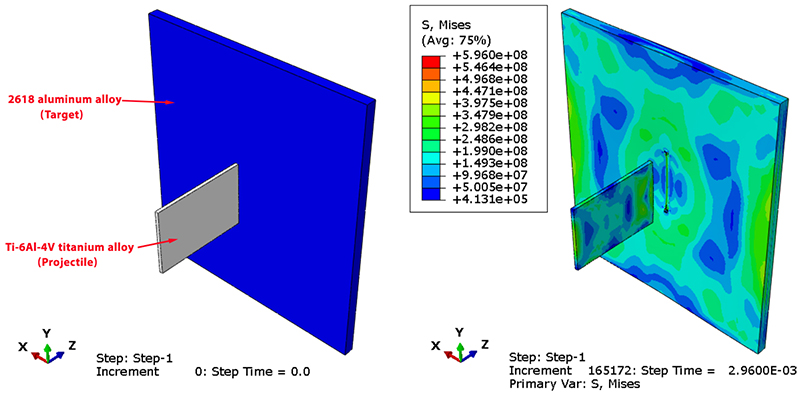
High-velocity impact of a titanium projectile on an aluminum plate.
Materials
In this problem, the plate is made of
2618 Aluminum alloy, while the projectile is made of
Ti-6Al-4V Titanium alloy.
Johnson-Cook Damage Model
To accurately simulate the material failure during the
high-velocity impact, the
Johnson-Cook damage model is used in Abaqus.
This model is suitable for describing the failure behavior of
ductile metals under conditions involving
large plastic deformation, high strain rates, and material failure.
In this simulation, the Johnson-Cook damage model is used to
predict the initiation and evolution of damage in the material
during the impact process. The model considers the effects of
plastic strain, strain rate, and temperature on
material failure.
Impact Analysis
In this analysis, the titanium projectile impacts the aluminum
plate at high velocity. The effect of the projectile impact
on the aluminum plate is investigated using Abaqus.
Impact of the titanium projectile on the aluminum plate.
Comparison with Experimental Results
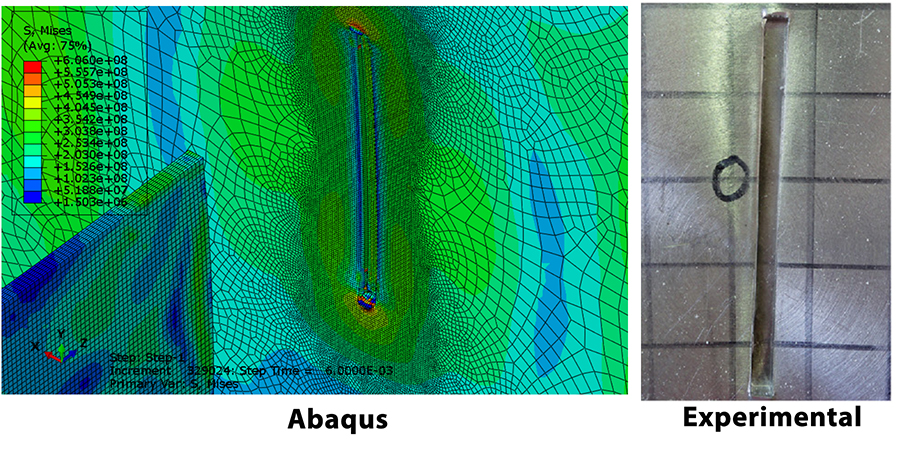
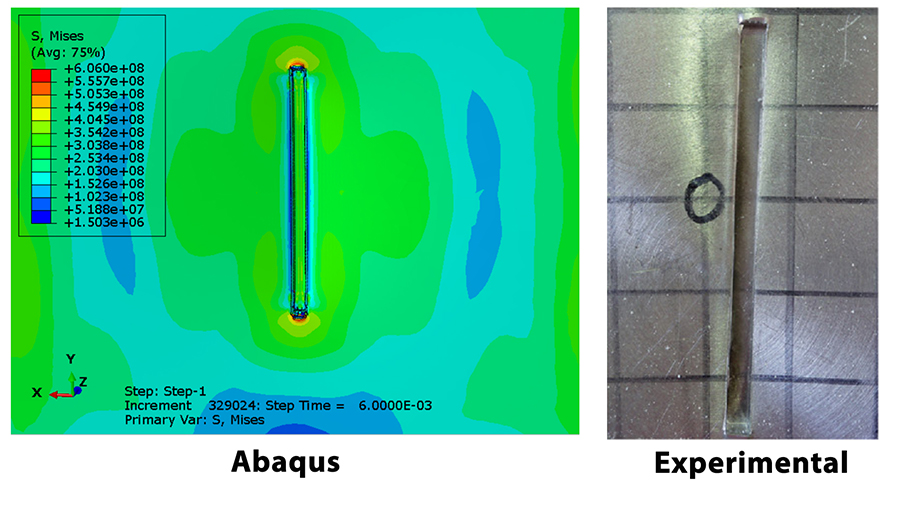
The results obtained from the Abaqus software are
compared with the experimental results.
As can be observed, the numerical results are very similar to the
experimental results.
As a result of the impact, a dent is created at the impact
location on the aluminum plate.
Comparison of the Abaqus results with the experimental results.
Projectile Velocity
The velocity of the projectile is also obtained from
the Abaqus analysis and its velocity diagram is plotted.
Projectile velocity diagram obtained from the Abaqus analysis.
Validation
This project has been validated, which means that the
results obtained from the Abaqus software are similar
to the results reported in the article.
In other words, this project is based on the
reference article.
What You Will Learn
How to model a high-velocity impact problem in Abaqus.
How to model an aluminum plate made of 2618 Aluminum alloy.
How to model a titanium projectile made of Ti-6Al-4V Titanium alloy.
How to define the impact analysis.
How to investigate the deformation of the aluminum plate.
How to observe the dent created by the projectile impact.
How to obtain the projectile velocity from Abaqus results.
How to plot the projectile velocity diagram.
How to compare Abaqus results with experimental results.
How to validate the numerical model using the reference article.
Key Features
High-velocity impact analysis.
Ti-6Al-4V Titanium projectile.
2618 Aluminum alloy plate.
Impact deformation and dent formation.
Projectile velocity analysis.
Projectile velocity diagram.
Comparison between Abaqus and experimental results.
Validation against the reference article.
Complete Abaqus CAE file.
Abaqus INP file.
Reference research paper.
Step-by-step video tutorial.
Reference
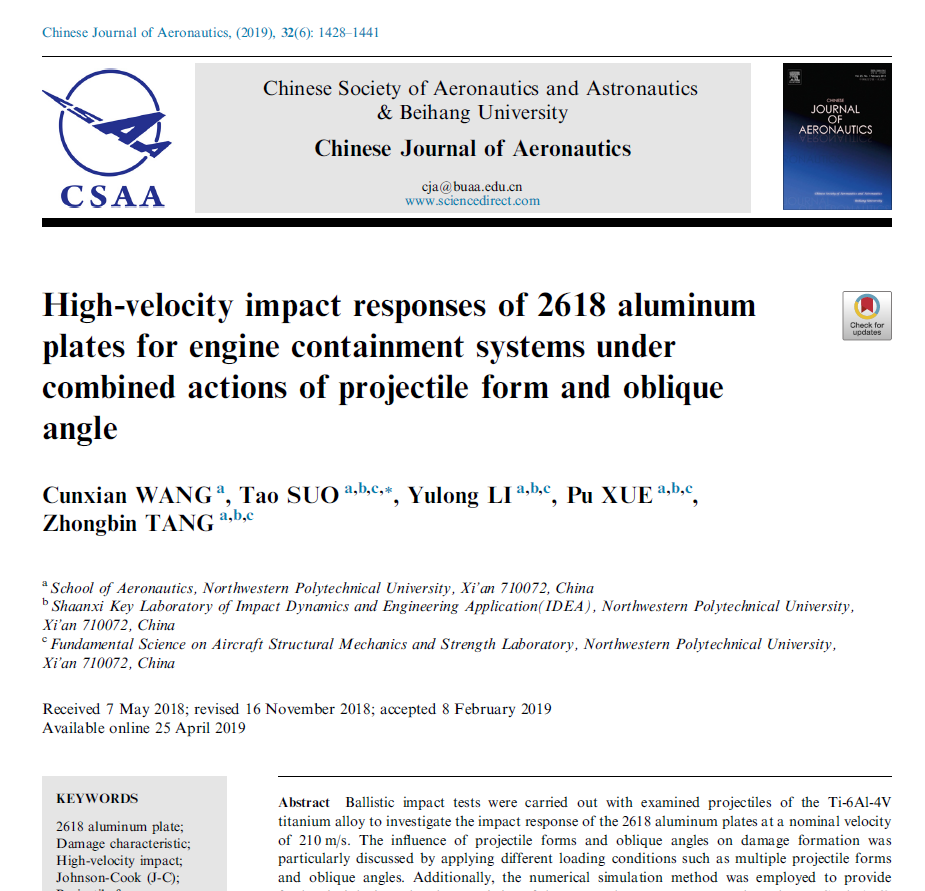
This project is based on the reference research article.
The research paper is included with the project files and can be used
to review the impact test and the experimental results.
Reference research article used for the numerical study and validation.
Files Included
What you will receive after purchase
File Type
Content
Description
🧩
Abaqus
CAE File
Complete Abaqus model
📄
Abaqus
INP File
Abaqus input file
📑
Document
Research Paper
Reference article used for the project
🎥
Video
Full Video
Step-by-step explanation of the project
Project Information
Important information about this project
🎥
Video Duration40 Minutes
📦
Total File Size800 MB
💻
Abaqus VersionAbaqus 2017
🌐
LanguageEnglish
📥
File DeliveryInstant Download
Payment & Support
Need help with your purchase?
💳
Secure Payment
Your payment is processed securely through our
online payment system.
✉️
Need Help?
If you have any questions about this product,
please contact us by email.
There are no reviews yet.