
Project Overview
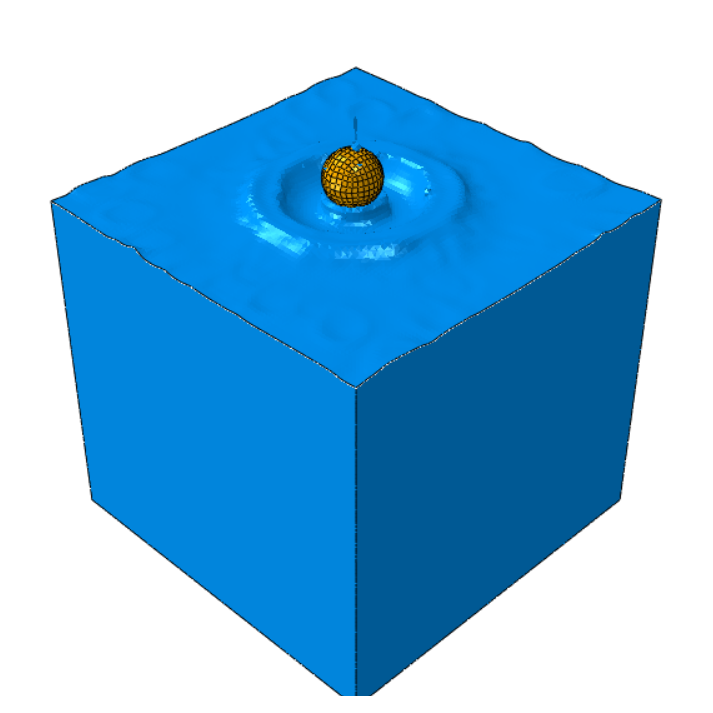
This tutorial focuses on the impact of a hollow sphere into a water surface using the Abaqus software.
The main objective of this example is to simulate the impact of the hollow sphere on the water surface and investigate the behavior of both the sphere and the water during the impact process.
Problem Description
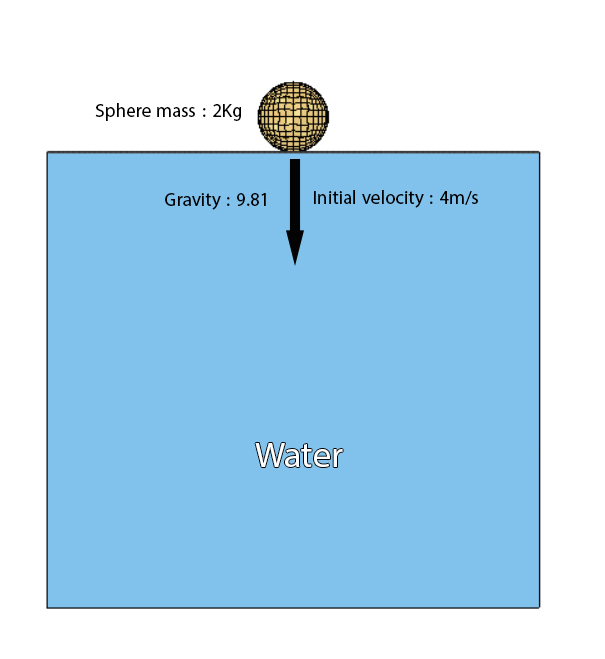
In this example, a hollow sphere with a mass of 2 kg impacts the water with an initial velocity of 4 m/s.
Since the sphere is hollow and its density is lower than the density of water, the sphere does not remain submerged. After entering the water, it moves back toward the water surface.
In this problem, the sphere is modeled as a deformable body and is made of steel. The sphere is modeled using shell elements. The water is modeled using the Eulerian approach.
Impact of the Hollow Sphere into Water
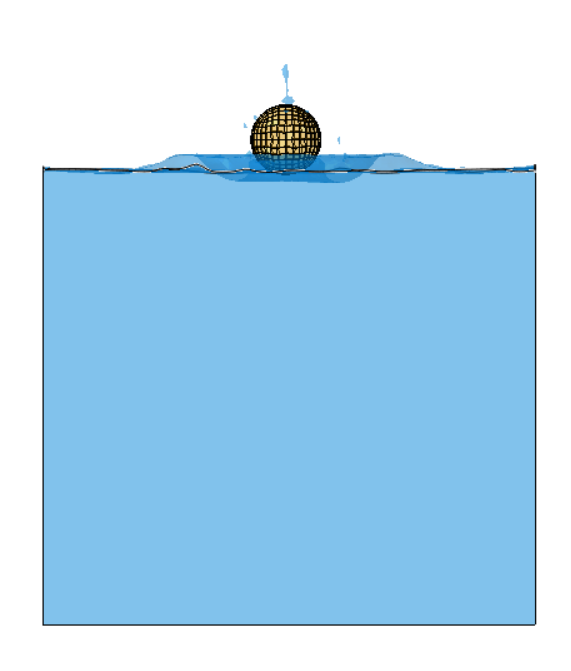
The hollow sphere enters the water after impacting the water surface. The interaction between the sphere and water is investigated during the impact process.
Due to the lower density of the hollow sphere compared with water, the sphere comes back toward the water surface after entering the water.
Water Wave Formation
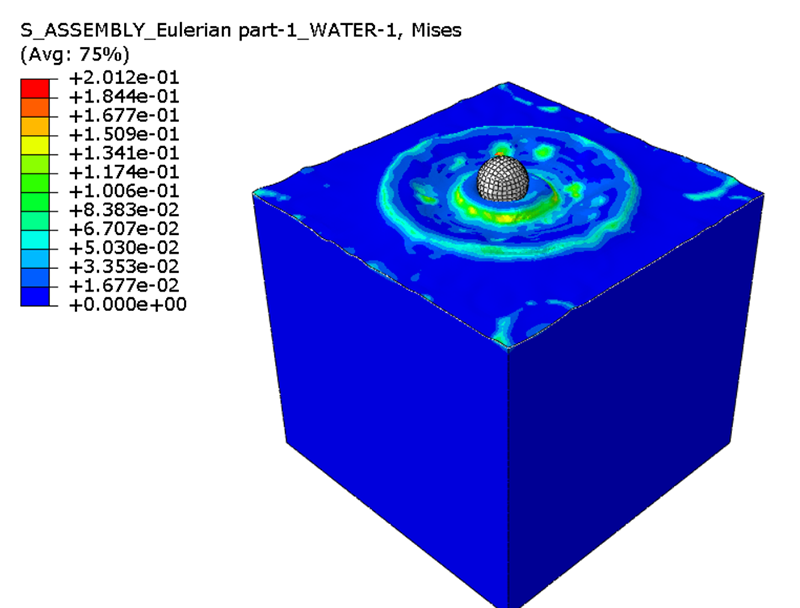
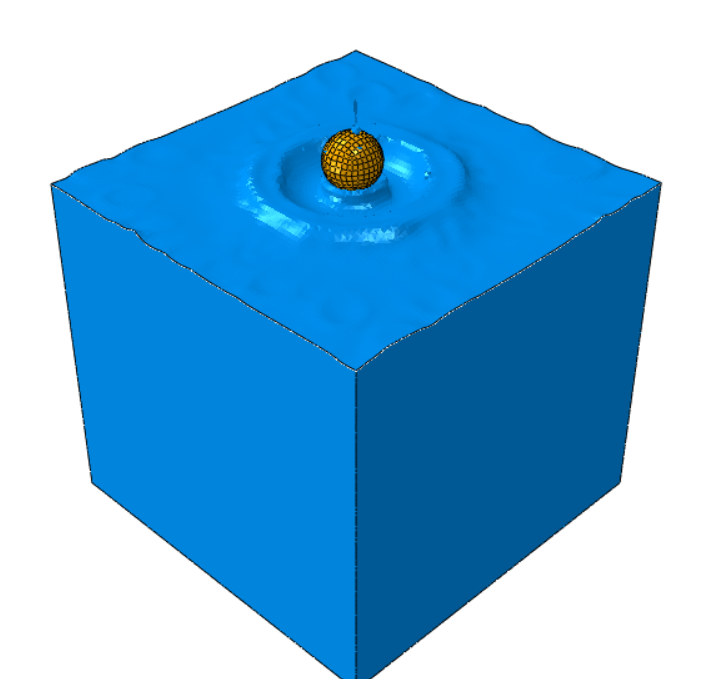
One of the important phenomena observed in this simulation is the formation and propagation of waves around the impact region.
The wave generated by the impact can be clearly observed as it spreads through the water surface during the simulation.
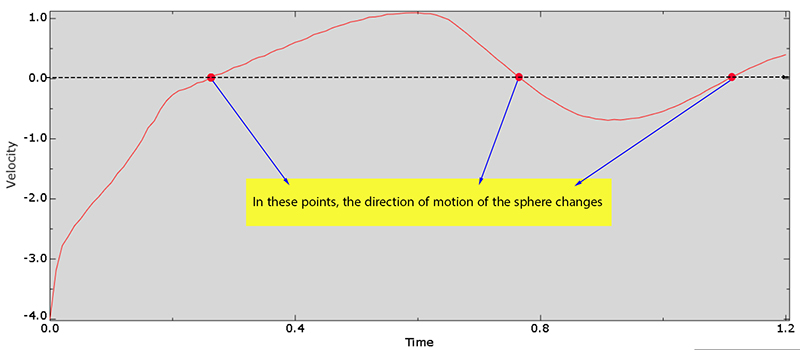
Sphere Velocity
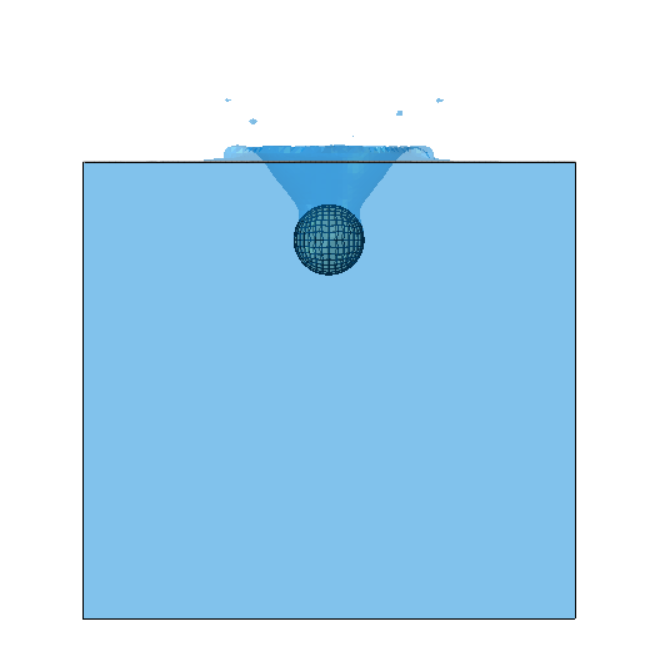
The velocity of the hollow sphere is also investigated during the simulation. The change in the sphere's motion can be observed as it enters the water and subsequently moves back toward the water surface.
Simulation Results
The Abaqus results demonstrate the complete impact process, including the entry of the hollow sphere into the water, the subsequent upward movement of the sphere, and the formation and propagation of waves around the impact area.
The simulation provides a clear visualization of the interaction between the hollow sphere and the water surface.
What You Will Learn
- How to model the impact of a hollow sphere into water in Abaqus.
- How to define an initial velocity of 4 m/s for the sphere.
- How to define a hollow sphere with a mass of 2 kg.
- How the density of the sphere affects its behavior in water.
- How to simulate the entry of the sphere into the water.
- How to observe the sphere returning toward the water surface.
- How to investigate wave formation and propagation after impact.
- How to observe the velocity of the sphere during the simulation.
Key Features
- Hollow sphere impact into water.
- Sphere mass of 2 kg.
- Initial velocity of 4 m/s.
- Sphere density lower than water.
- Sphere entry into the water.
- Return of the sphere toward the water surface.
- Water wave formation and propagation.
- Investigation of sphere velocity.
- Abaqus water impact simulation.
- Free Abaqus tutorial.
Project Information
Important information about this project
Payment & Support
Need help with this tutorial?
Free Tutorial
This Abaqus tutorial is available free of charge.
Need Help?
If you have any questions about this tutorial, please contact us by email.
saeedofmoeini@gmail.com
bouzid
abaqus exemple