
Product Overview
In this project, a steel plate shear wall (SPSW) with a partial-length connection to the column is modeled in Abaqus to investigate its behavior under pushover loading.
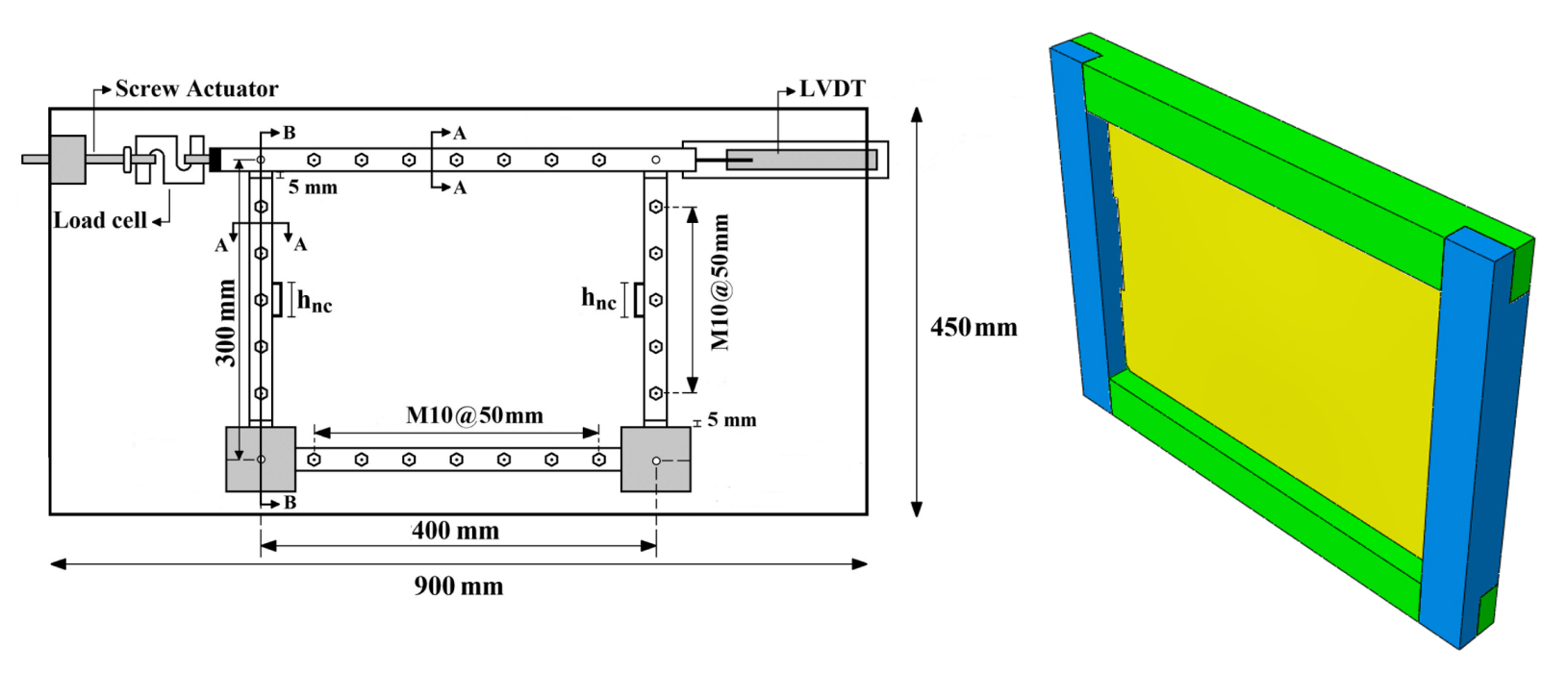
In conventional steel plate shear walls, the infill plate is fully connected to the surrounding boundary elements. In this study, a new connection strategy is investigated by removing the connection between the infill plate and column at the middle height of the panel. This approach aims to reduce the flexural demand on column while maintaining the tension field action in the infill plate.
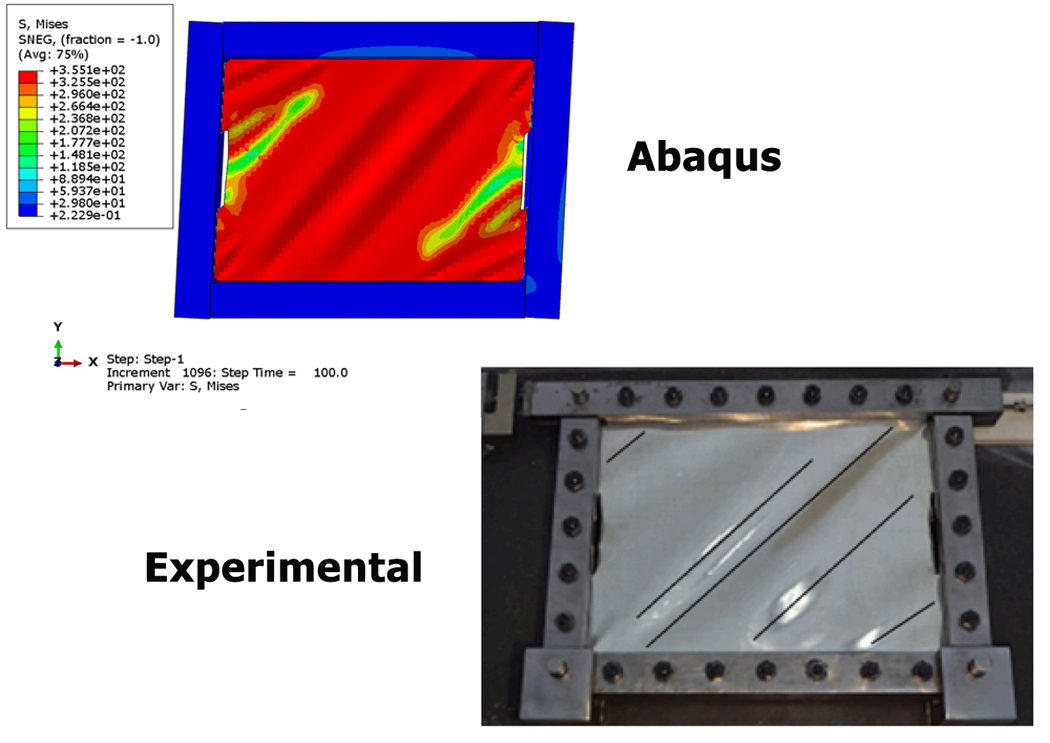
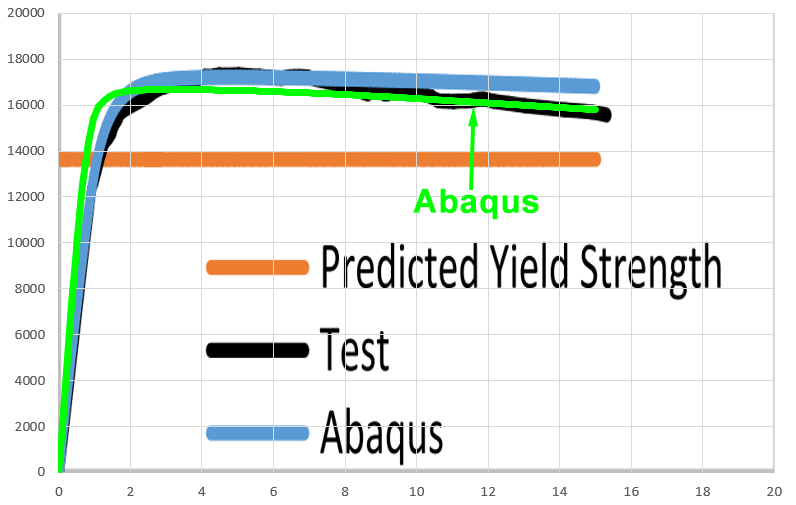
In this project, specimen 4 from the experimental study is simulated. This specimen has a 30% not-connected length ratio, meaning that 30% of the infill plate height at the middle region is disconnected from the vertical members.
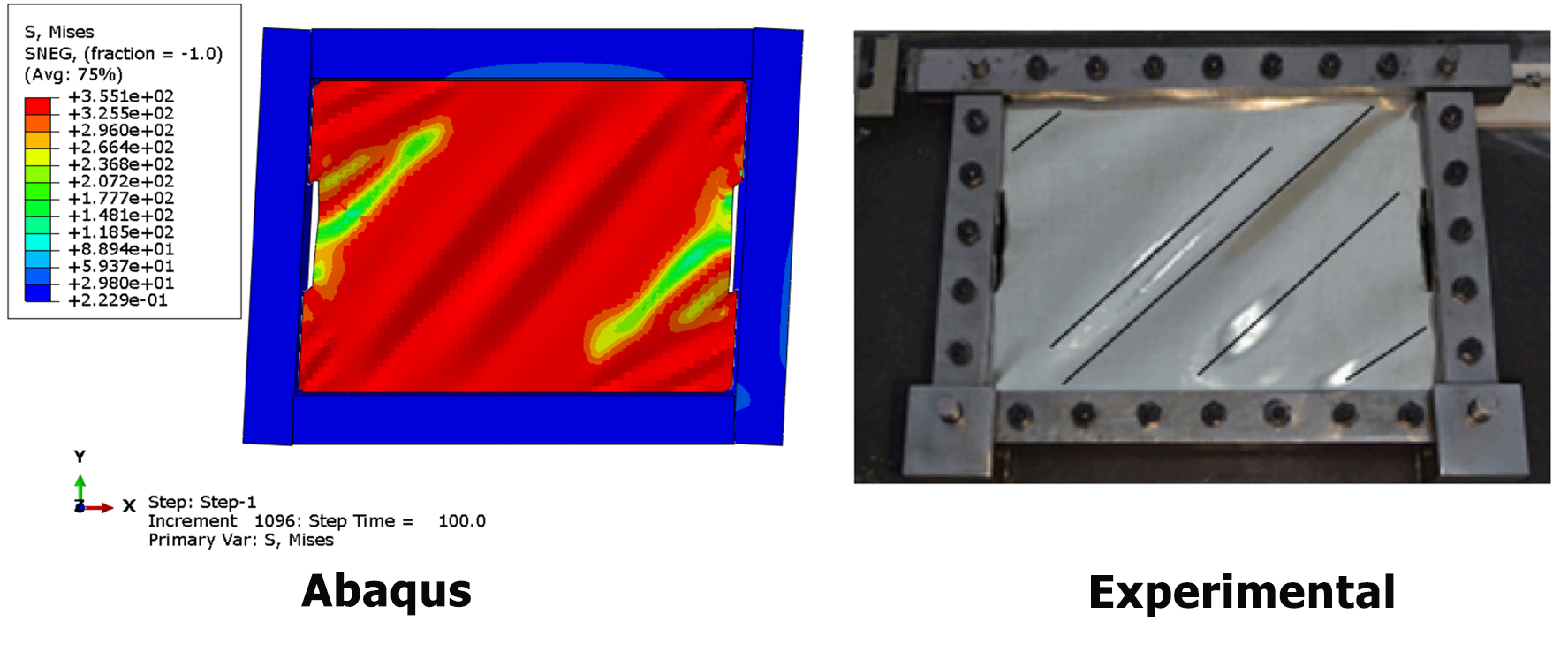
The numerical model is developed based on the experimental study reported in the reference paper. The Abaqus results are compared with the reported experimental results to evaluate the accuracy of the numerical model.
Model Description
The model represents a steel plate shear wall with a partial-length connection to the column. The numerical model is developed according to the configuration and information provided in the reference experimental study.
The connections between the horizontal and vertical members are defined as hinged connections. This assumption eliminates moment transfer at the joints and allows the model to focus on the behavior of the infill plate and tension field action under lateral loading.
The geometry, material properties, connection details, boundary conditions, and analysis settings are defined in Abaqus based on the experimental configuration.
Partial-Length Connection
In this model, the steel plate is connected to the column over a partial length rather than along the entire height of the column.
The connection configuration is modeled according to the reference study in order to investigate its influence on the structural response of the steel plate shear wall.
Buckling Analysis and Initial Imperfection
Before performing the pushover analysis, a buckling analysis is carried out to determine the buckling mode of the steel plate shear wall.
The obtained buckling mode is then used to introduce an initial geometric imperfection into the model. This procedure helps the numerical model better represent the initial imperfections of the experimental specimen.
Pushover Loading
A monotonic pushover load is applied to the shear wall according to the loading procedure used in the reference study.
The structure is gradually loaded beyond its elastic range to investigate its nonlinear behavior and load-carrying behavior.
The applied load and corresponding displacement are recorded during the analysis to obtain the pushover response of the model.
Deformation and Structural Response
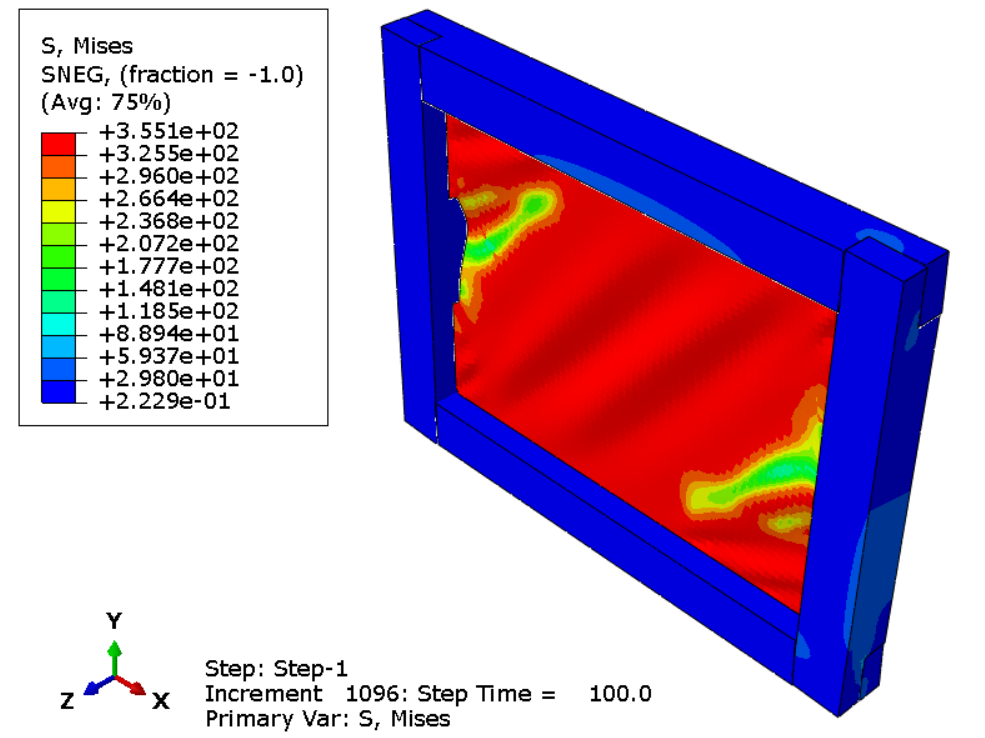
The deformation pattern of the steel plate shear wall is investigated during the nonlinear pushover analysis.
The Abaqus results are used to evaluate the deformation and structural response of the shear wall as the applied load increases.
Results and Pushover Response
The reaction force and displacement results are extracted from Abaqus after completing the pushover analysis.
These results are processed to obtain the force–displacement pushover curve of the steel plate shear wall.
The resulting curve is used to evaluate the nonlinear behavior and load-carrying response of the numerical model.
Experimental Validation
The numerical results obtained from Abaqus are compared with the experimental results reported in the reference research paper.
The comparison focuses on the force–displacement response and the overall structural behavior of the steel plate shear wall under pushover loading.
The comparison demonstrates how accurately the Abaqus model reproduces the behavior reported in the experimental study.
Key Features
- Pushover analysis of a steel plate shear wall.
- Partial-length connection between the steel plate and column.
- Buckling analysis and extraction of buckling modes.
- Initial geometric imperfection based on the buckling mode.
- Nonlinear analysis under monotonic loading.
- Force–displacement pushover response.
- Comparison with experimental results.
- Complete Abaqus model files.
- Excel file for numerical results.
- Research paper.
- Step-by-step video tutorial.
What You Will Learn
- How to model a steel plate shear wall with a partial-length connection to the column.
- How to define the geometry and material properties of the model.
- How to define the connection between the steel plate and the column.
- How to define the required interactions and constraints.
- How to define the boundary conditions of the shear wall.
- How to perform a buckling analysis in Abaqus.
- How to extract the buckling mode from Abaqus.
- How to introduce an initial geometric imperfection using the buckling mode.
- How to define monotonic pushover loading in Abaqus.
- How to perform nonlinear analysis under pushover loading.
- How to obtain the force–displacement pushover curve.
- How to extract and process Abaqus results using Excel.
- How to compare numerical and experimental results.
Reference
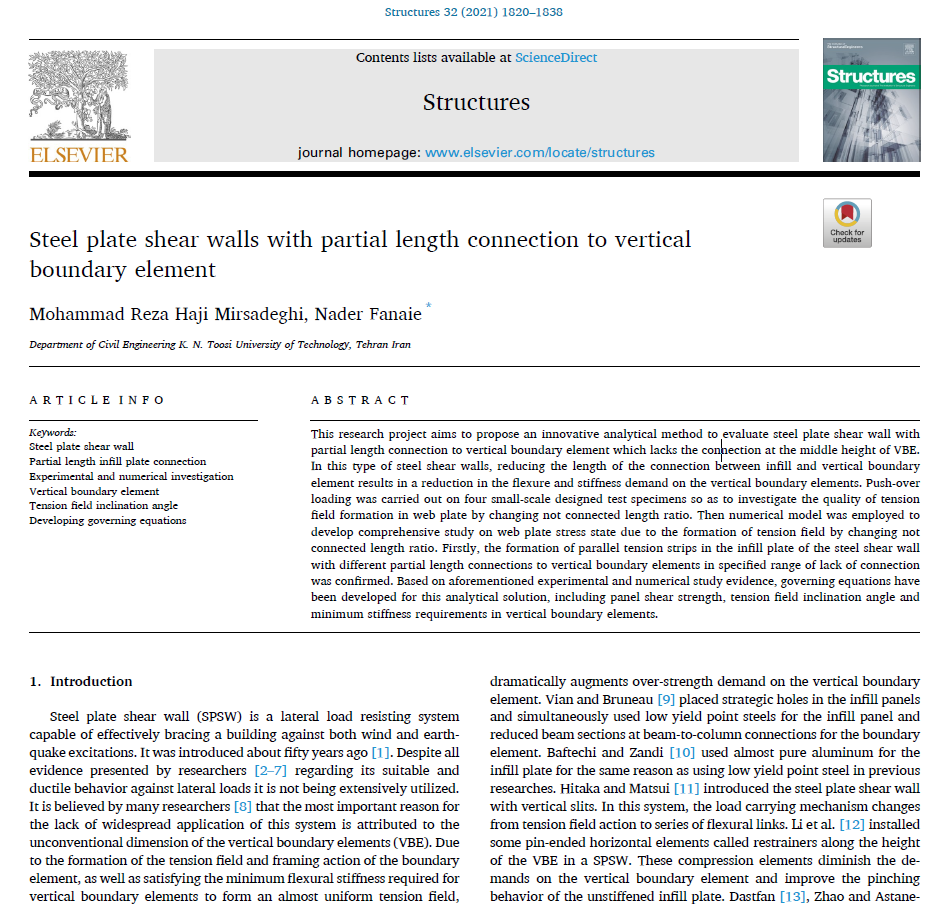
This project is based on the experimental study provided in the reference research paper.
The paper is included with the project files and can be used to review the experimental configuration, loading procedure, and reported results.
Project Information
Important information about this project
Payment & Support
Need help with your purchase?
Secure Payment
Your payment is processed securely through our online payment system.
Need Help?
If you have any questions about this product, please contact us by email.
saeedofmoeini@gmail.com
There are no reviews yet.