
Product Overview
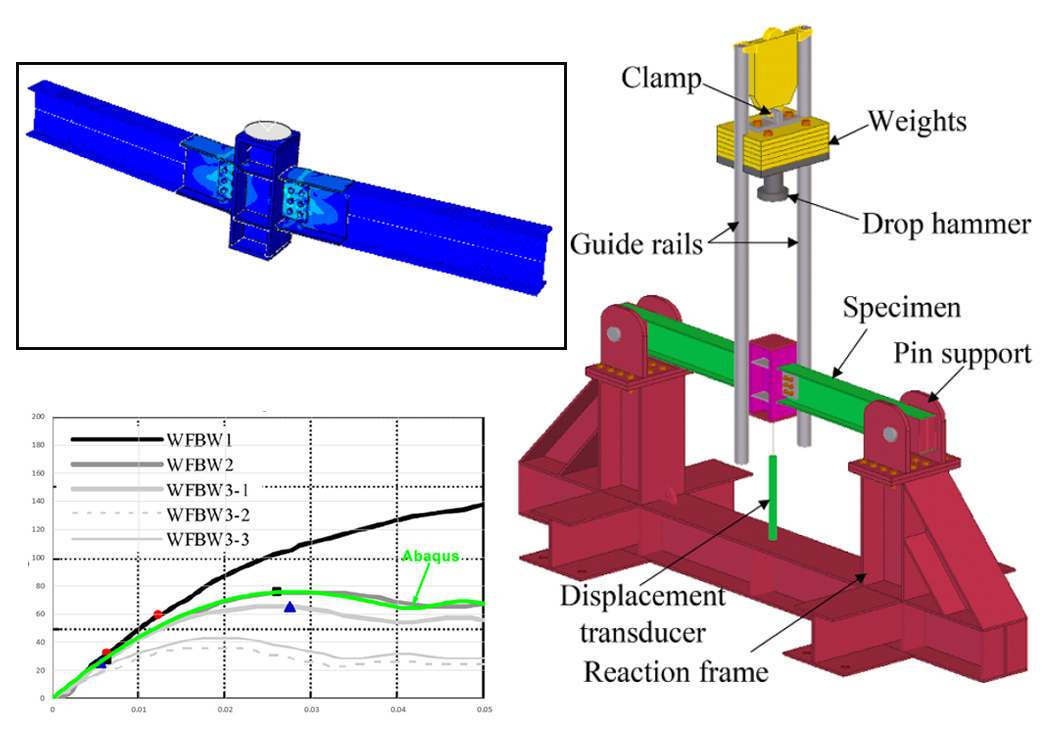
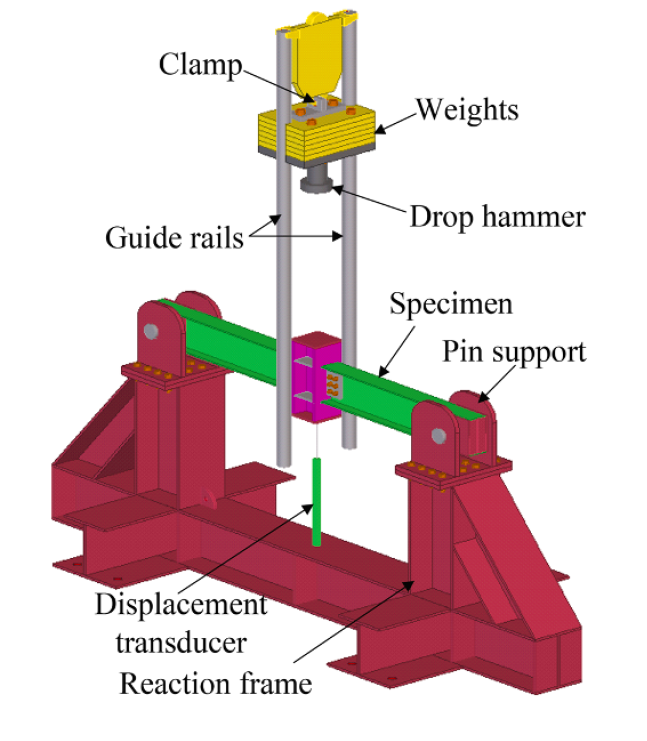
In this project, the impact behavior of a steel beam-column connection is simulated using the Abaqus software. The numerical model represents the WFBW2 connection investigated experimentally in the reference study.
A 960 kg drop hammer impacts the beam-column substructure with an initial velocity of 5.43 m/s. The Abaqus model is used to study the connection response and column displacement during the impact.
The objective of this simulation is to investigate the response of the steel beam-column connection subjected to impact loading and to calculate the displacement of the column.
Model Description
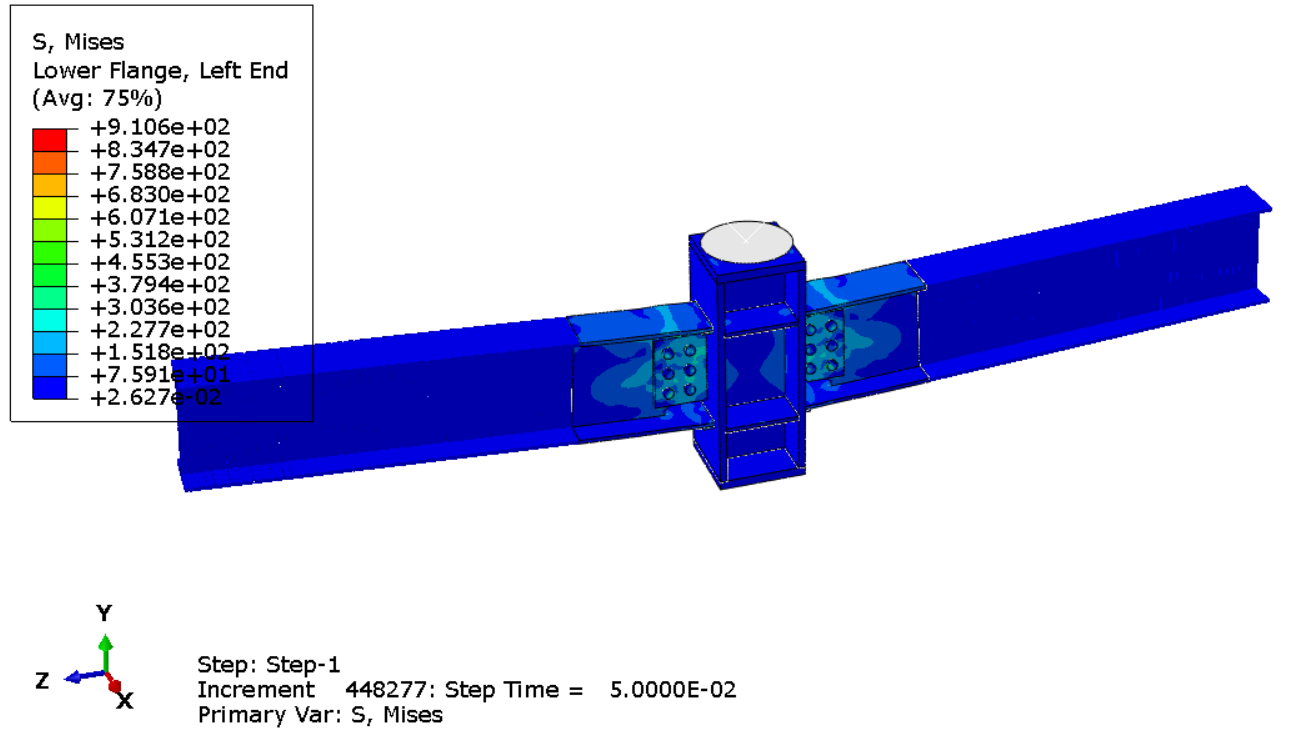
The WFBW connection is a welded flange–bolted web connection with an enlarged weld access hole. The beam flanges are welded to the column, while the beam web is connected to the shear plate using high-strength bolts.
The model consists of a beam, column, shear plate, bolts, drop hammer, and continuity plate.
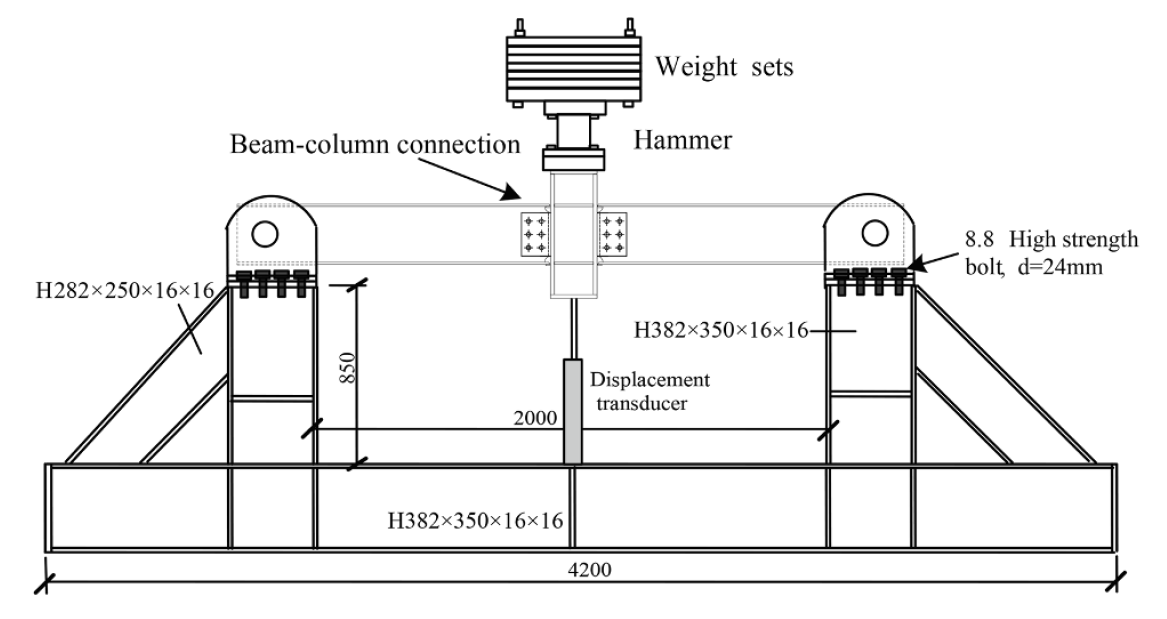
The numerical model is developed based on the experimental specimen reported in the reference article.
WFBW Connection
In the WFBW connection, the beam flanges are welded to the column, while the beam web is connected to the shear plate using bolts.
The numerical model reproduces the configuration of the WFBW2 experimental specimen used in the reference study.
Experimental Model
The beam is an H250 × 125 × 6 × 9 mm steel section with a length of 1100 mm. The column is a welded H200 × 200 × 16 × 16 mm section with a height of 500 mm. The shear plate has a thickness of 10 mm.
The ends of the beams are pinned to represent the boundary conditions of the experimental setup.
Impact Loading
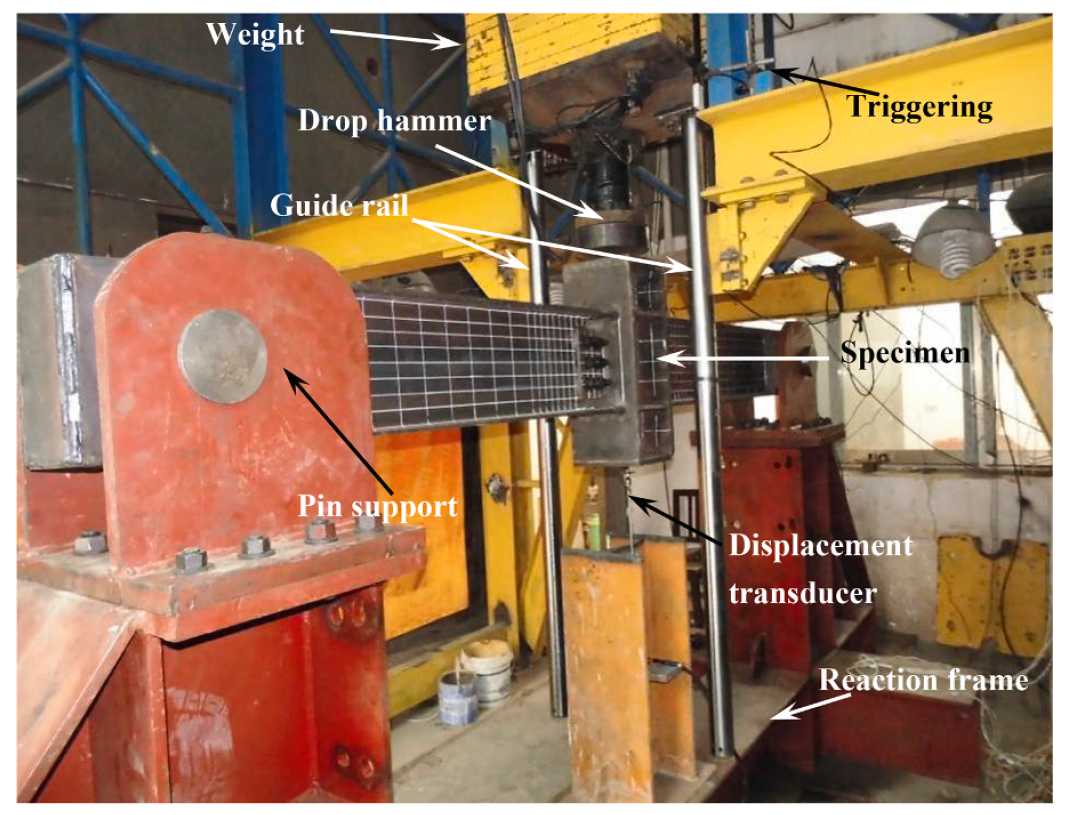
In this simulation, a 960 kg drop hammer impacts the column with an initial velocity of 5.43 m/s.
The drop hammer is modeled as a rigid body with a diameter of 200 mm. The impact event is simulated using an explicit dynamic analysis in Abaqus to investigate the response of the beam-column connection and the resulting column displacement.
Column Displacement
The main objective of this simulation is to determine the column displacement caused by the impact of the 960 kg drop hammer.
The displacement response is extracted from the Abaqus results and used to evaluate the behavior of the connection under impact loading.
Displacement–Time Diagram
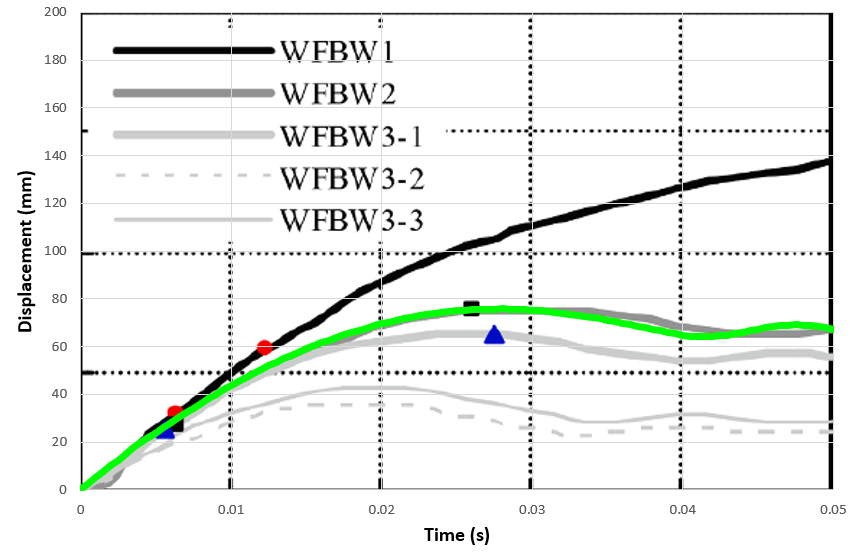
The displacement–time diagram obtained from the Abaqus software is compared with the experimental results.
In this problem, the WFBW2 model is simulated. Therefore, the numerical results obtained from Abaqus should be compared with the WFBW2 experimental curve.
Validation
This project has been validated by comparing the results obtained from Abaqus with the experimental results reported in the reference article.
The numerical displacement–time response is compared with the experimental WFBW2 curve to evaluate the accuracy of the Abaqus model.
The good agreement between the numerical and experimental results demonstrates that the Abaqus model can reproduce the response of the experimental specimen under impact loading.
Key Features
- Steel beam-column connection under impact loading.
- WFBW welded flange–bolted web connection.
- WFBW2 experimental model.
- 960 kg drop hammer.
- Initial impact velocity of 5.43 m/s.
- Beam, column, shear plate, bolts, drop hammer, and continuity plate.
- Dynamic impact analysis.
- Column displacement calculation.
- Displacement–time response.
- Comparison with experimental WFBW2 results.
- Validated Abaqus model.
- Complete Abaqus CAE and INP files.
- Steel material Excel file.
- Results Excel file.
- Reference research paper.
- Step-by-step video tutorial.
What You Will Learn
- How to model a steel beam-column connection under impact loading in Abaqus.
- How to model the beam, column, shear plate, bolts, drop hammer, and continuity plate.
- How to model a WFBW connection.
- How to define a welded flange–bolted web connection.
- How to define the drop hammer and its initial velocity.
- How to model impact between the drop hammer and column.
- How to perform an explicit dynamic analysis in Abaqus.
- How to obtain the displacement of the column during impact.
- How to extract displacement–time results from Abaqus.
- How to compare Abaqus results with experimental results.
- How to validate an Abaqus impact model using experimental results.
Reference
This project is based on the reference research article used for experimental validation. The paper is included with the project files and can be used to review the experimental setup, WFBW2 specimen, impact loading procedure, and reported results.
Project Information
Important information about this project
Payment & Support
Need help with your purchase?
Secure Payment
Your payment is processed securely through our online payment system.
Need Help?
If you have any questions about this product, please contact us by email.
saeedofmoeini@gmail.com
There are no reviews yet.