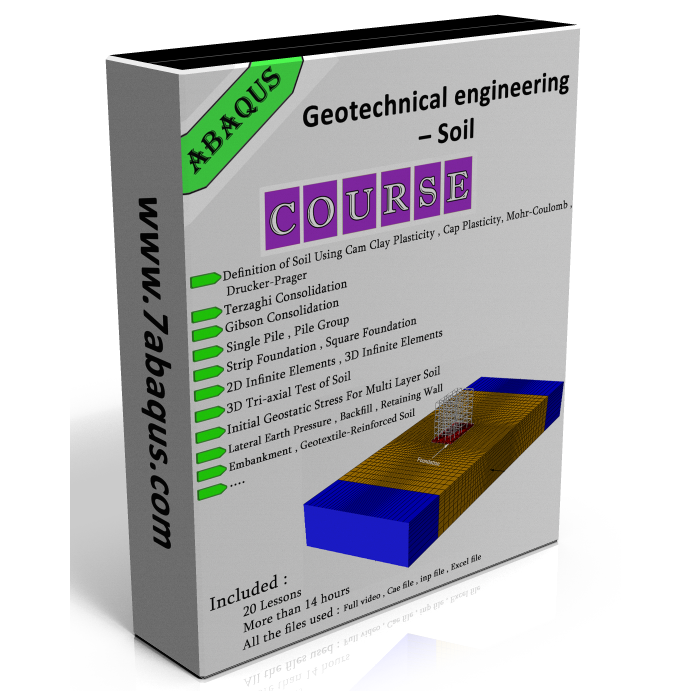
Price
€59 €41
Geotechnical Engineering Analysis in Abaqus
A complete practical course covering 20 geotechnical engineering tutorials for soil, foundations, piles, consolidation, seepage, and soil–structure interaction using Abaqus.
Learn Geotechnical Engineering Through Practical Abaqus Examples
This course provides a practical approach to modeling and analyzing soil and geotechnical engineering problems in Abaqus. It is designed for students, researchers, and engineers who want to develop practical skills in finite element modeling of soil, foundations, piles, and soil–structure interaction.
Throughout the course, you will work through 20 practical tutorials covering a wide range of geotechnical engineering problems. The tutorials introduce the main steps required to create the model, define soil properties, establish interactions, apply boundary conditions and loading, generate the mesh, and perform the numerical analysis in Abaqus.
The course covers different types of soil and foundation problems, including bearing capacity, pile analysis, consolidation, seepage, and other geotechnical applications. These examples help you understand how soil behavior and soil–structure interaction can be represented in a finite element model.
A key part of the course is learning how to model soil behavior and soil–structure interaction in Abaqus. Through the practical simulations, you will work with different modeling approaches and examine how changes in soil, loading, boundary conditions, and structural components affect the numerical response.
Many of the tutorials are based on examples from Sam Helwany's geotechnical engineering book, allowing the Abaqus results to be compared with the corresponding reference results. Other examples are compared with analytical solutions to help evaluate the numerical results obtained from the simulations.
The course focuses on practical modeling rather than only theoretical concepts. By working through the examples, you will gain experience with the complete Abaqus workflow for geotechnical problems, from model setup and material definition to analysis and interpretation of the results.
By completing this course, you will gain practical experience in modeling soil and geotechnical engineering problems in Abaqus, analyzing foundations, piles, consolidation and seepage problems, and evaluating numerical results against reference and analytical solutions.
All 20 Tutorials — Included in the Course
Explore the complete collection of practical Abaqus tutorials covering soil, foundations, consolidation, seepage, and soil–structure interaction.
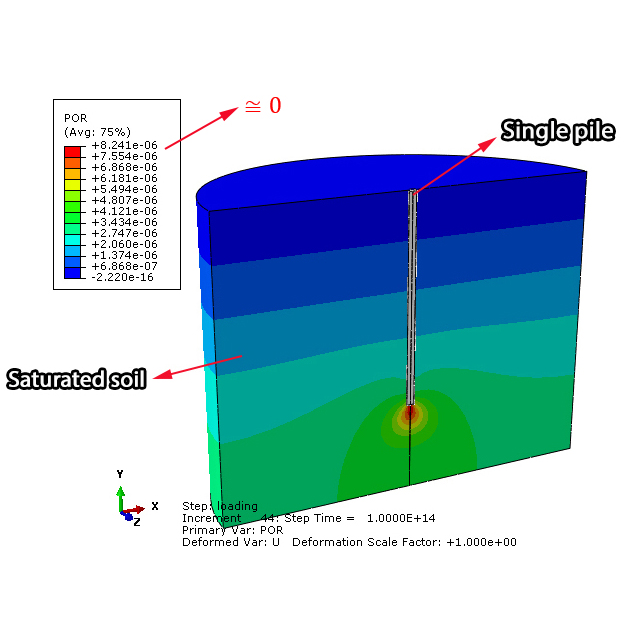
01
Calculation of the Load Capacity of a Single Pile Abaqus
View Full Tutorial →
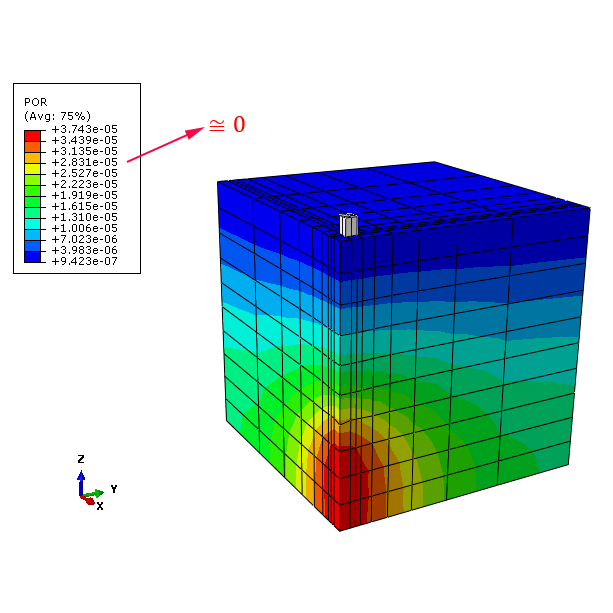
02
Calculation of the Load Capacity of the Pile Group Abaqus
View Full Tutorial →
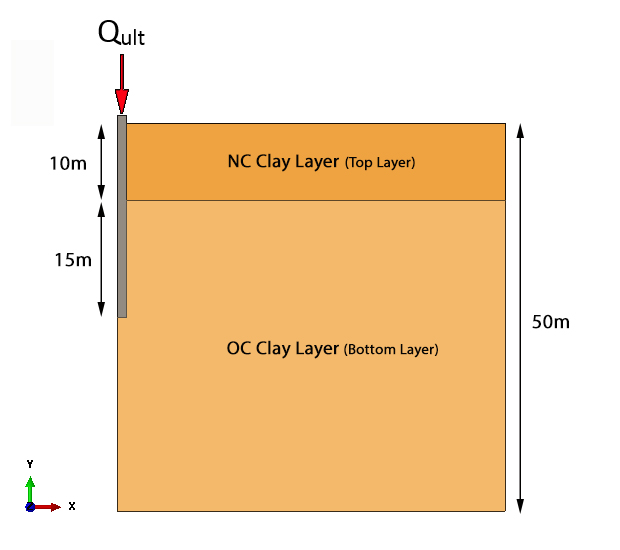
03
Load Capacity of a Single Pile in Multi-Layer Soil under Vertical Loading Abaqus
View Full Tutorial →
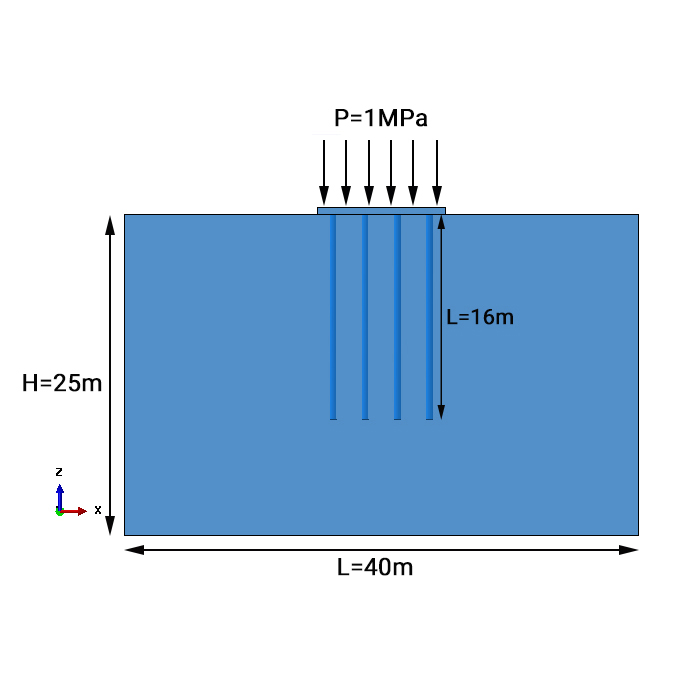
04
Simulation of the Piled Raft in Interaction with Soil in Abaqus
View Full Tutorial →
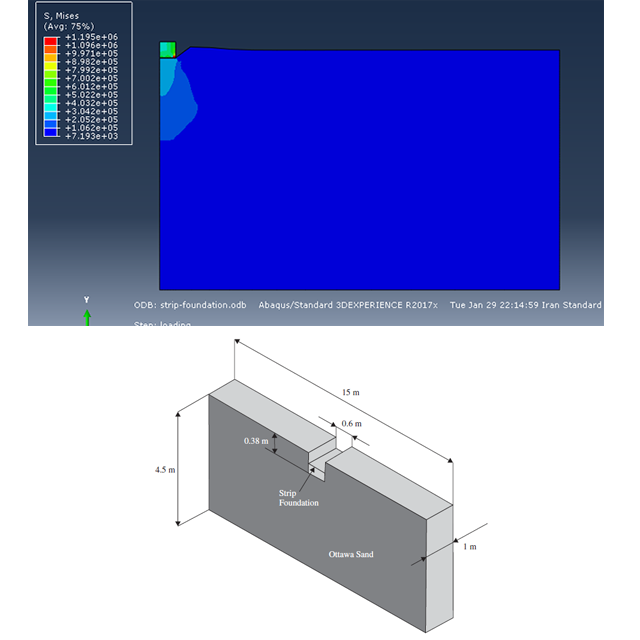
05
Bearing Capacity Failure of a Strip Foundation Abaqus
View Full Tutorial →
06
Bearing Capacity of a Strip Foundation Using Mohr-Coulomb and Drucker-Prager Abaqus
View Full Tutorial →
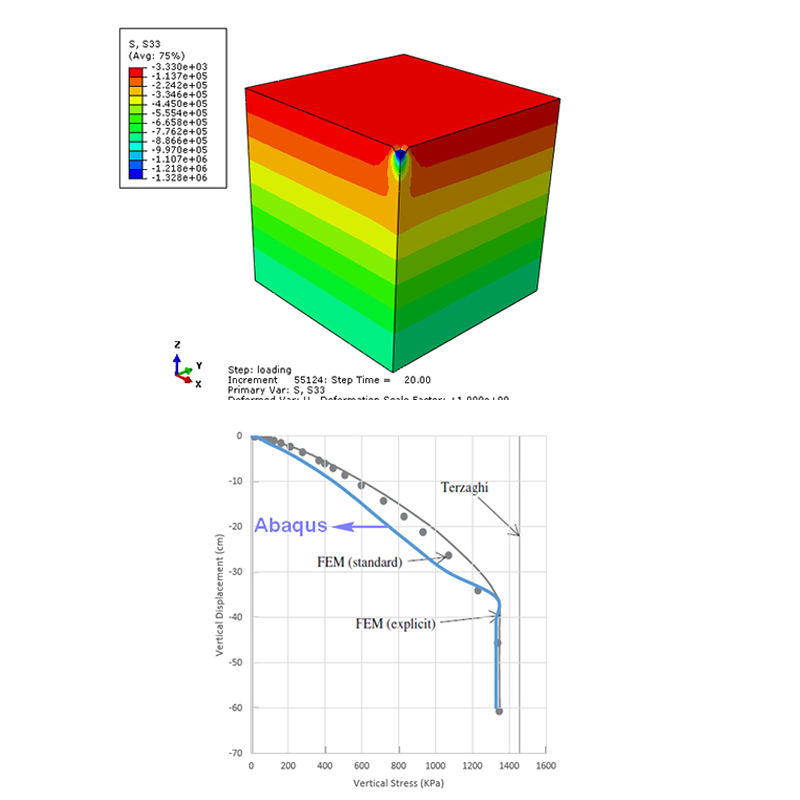
07
Bearing Capacity of a Square Foundation Abaqus
View Full Tutorial →
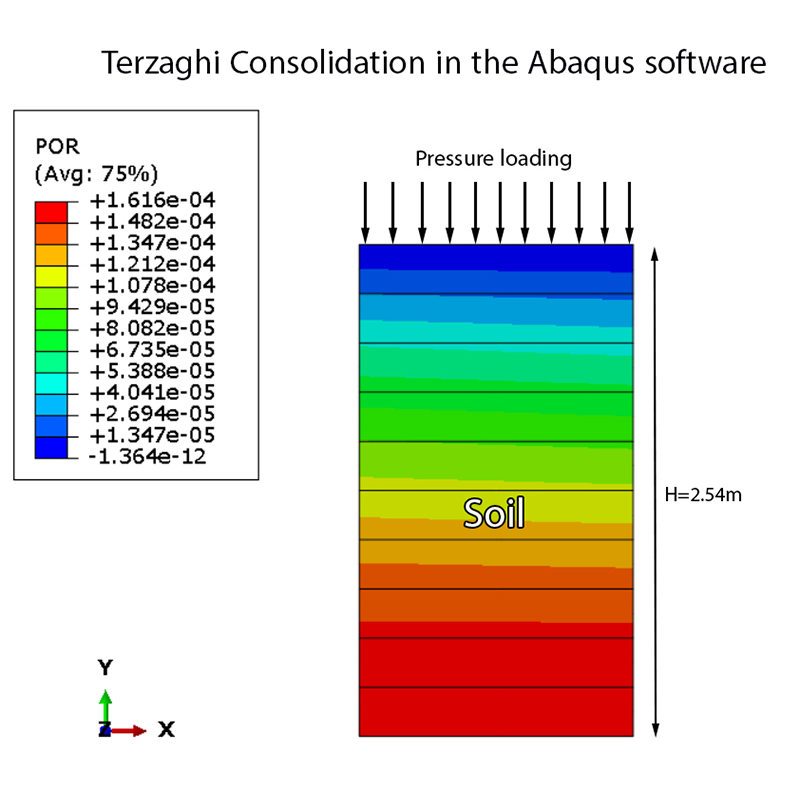
08
Terzaghi Consolidation in the Abaqus Software
View Full Tutorial →
09
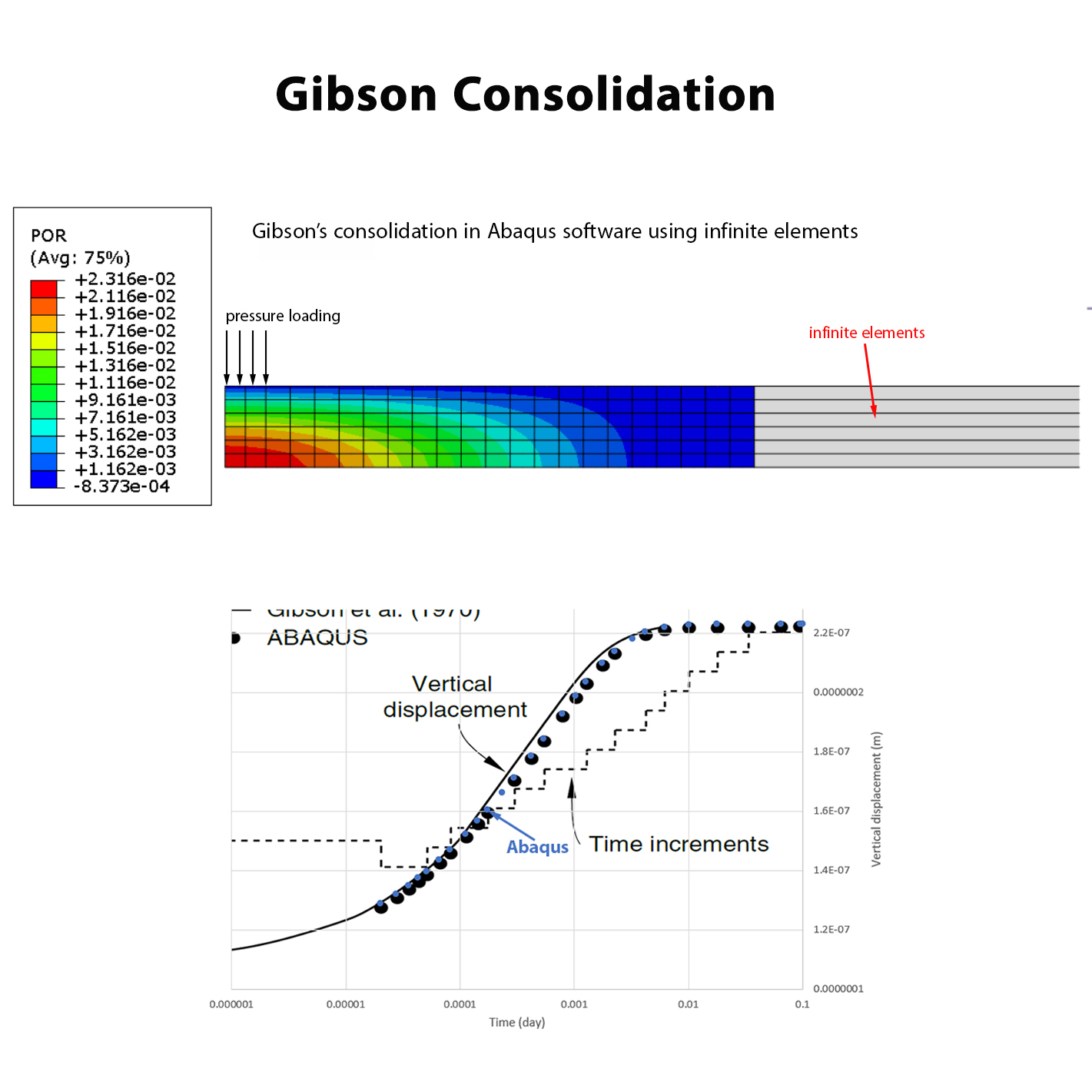
Gibson Consolidation in Abaqus Using Infinite Elements
View Full Tutorial →
10
3D Triaxial Test of Soil Using Cam Clay, Cap, Mohr-Coulomb and Drucker-Prager Abaqus
View Full Tutorial →
11
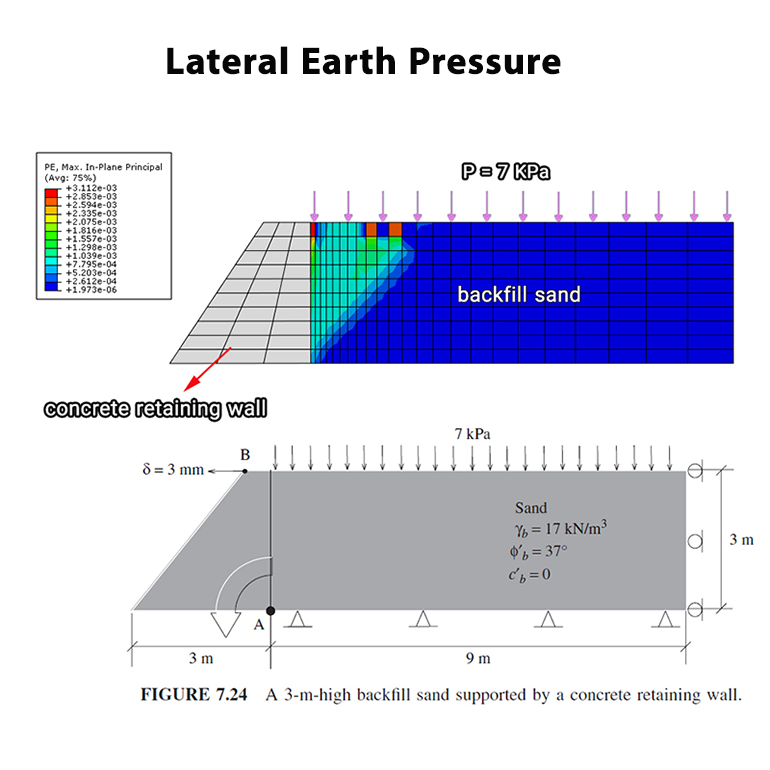
Backfill Sand Supported by a Concrete Retaining Wall -Lateral Earth Pressure
View Full Tutorial →
12
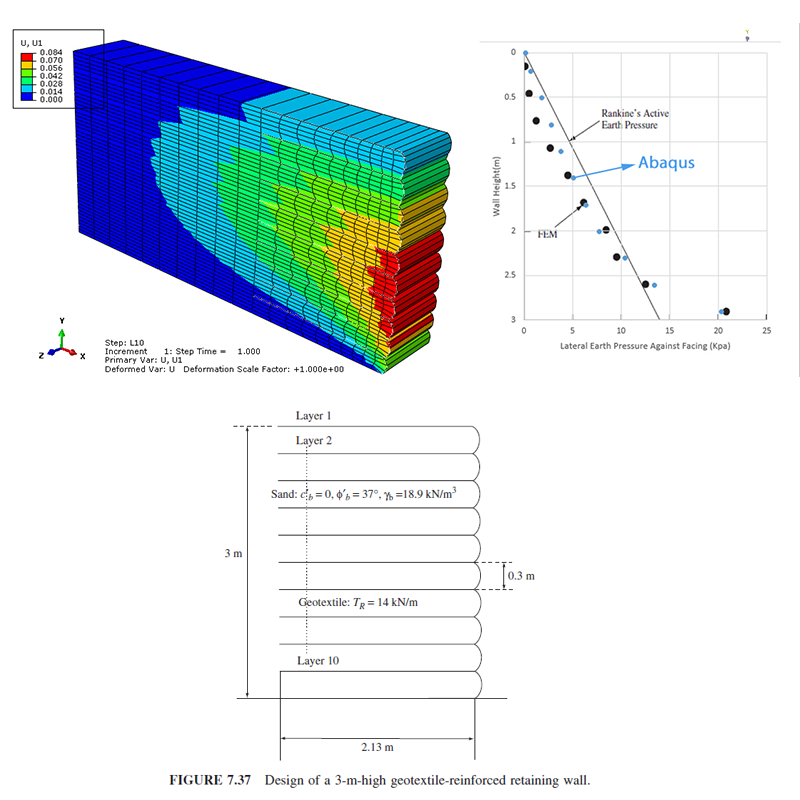
Sequential Construction of a Geotextile-Reinforced Soil Retaining Wall Abaqus
View Full Tutorial →
13
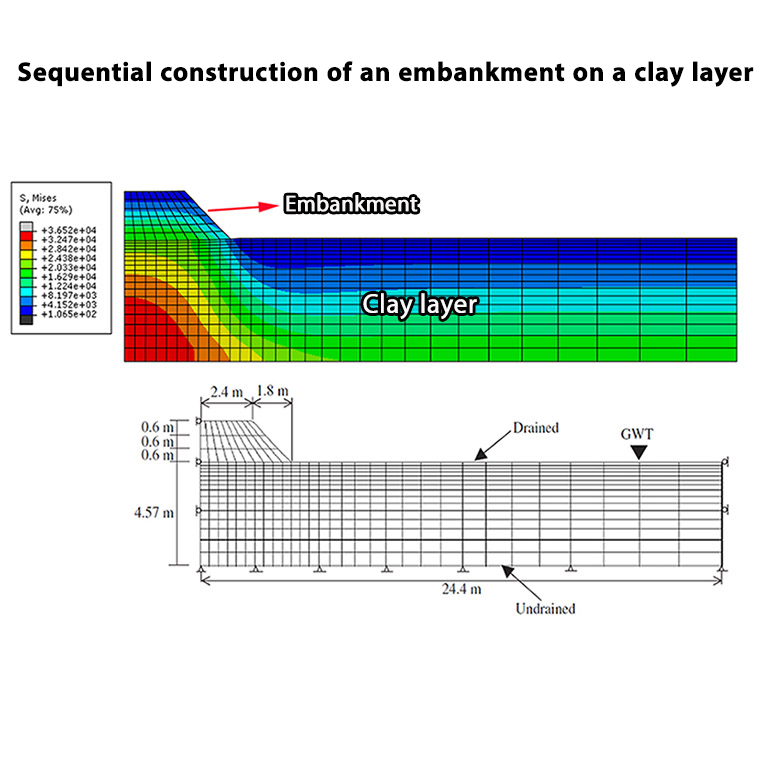
Sequential Construction of an Embankment on a Clay Layer Abaqus
View Full Tutorial →
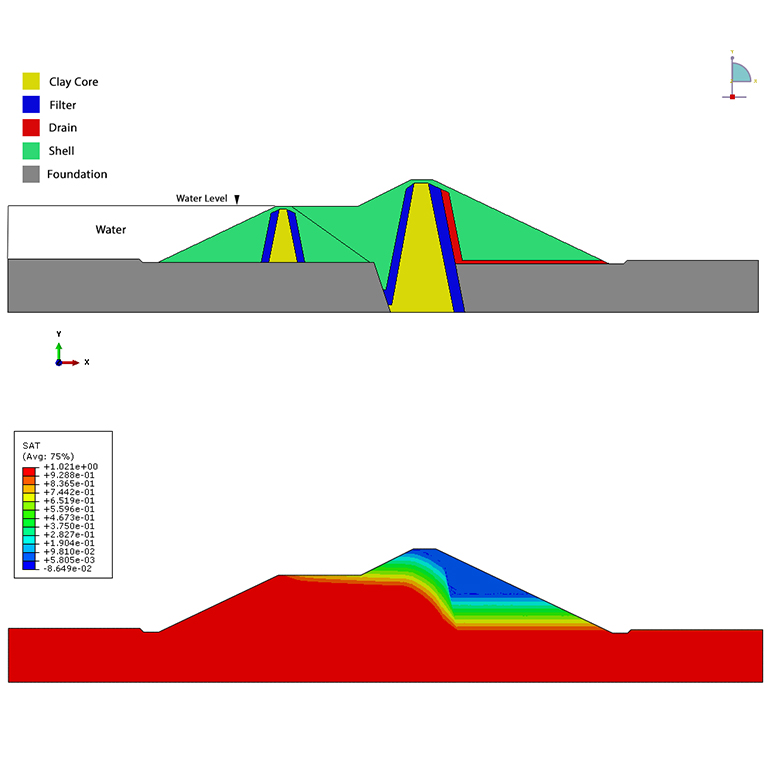
14
Seepage and Water Leakage from Foundation and Body of Earth Dams Abaqus
View Full Tutorial →
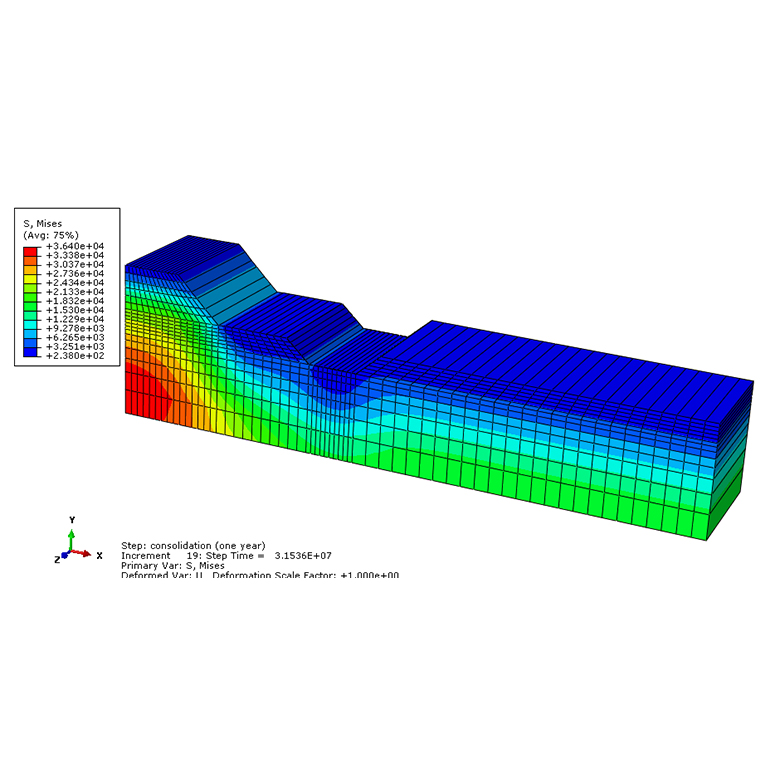
15
Simulation of Soil Excavation Abaqus
View Full Tutorial →
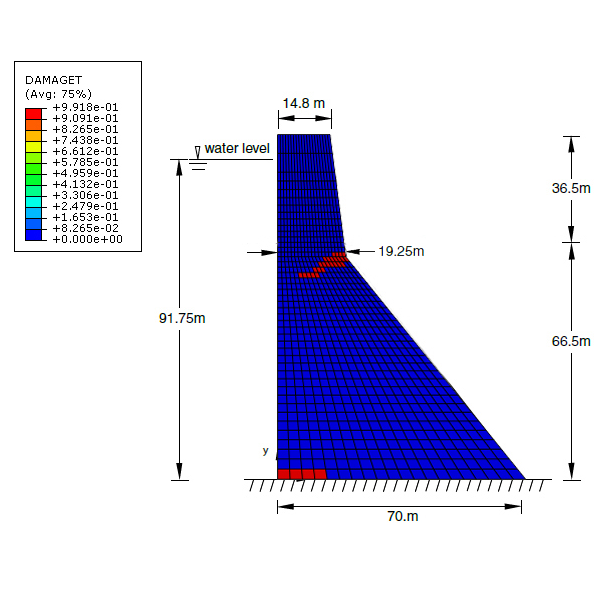
16
Simulation of a Magnitude 6.5 Earthquake on a Concrete Gravity Dam Abaqus
View Full Tutorial →
17
Seismic Analysis of a Concrete Gravity Dam with Water Reservoir and Foundation Abaqus
View Full Tutorial →
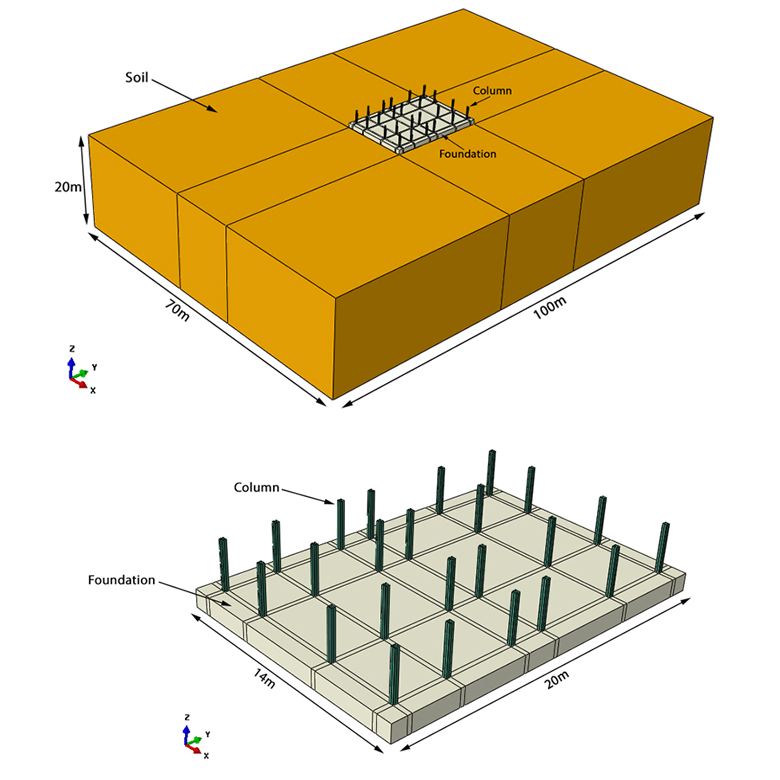
18
Interaction Between the Soil and Foundation Abaqus
View Full Tutorial →
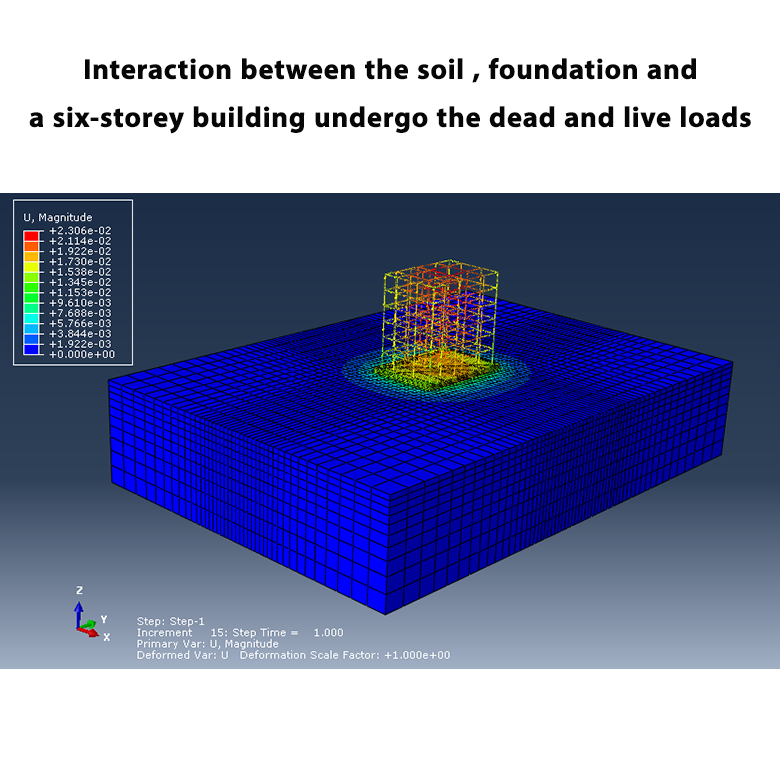
19
Interaction Between Soil, Foundation and a Six-Storey Building under Dead and Live Loads
View Full Tutorial →
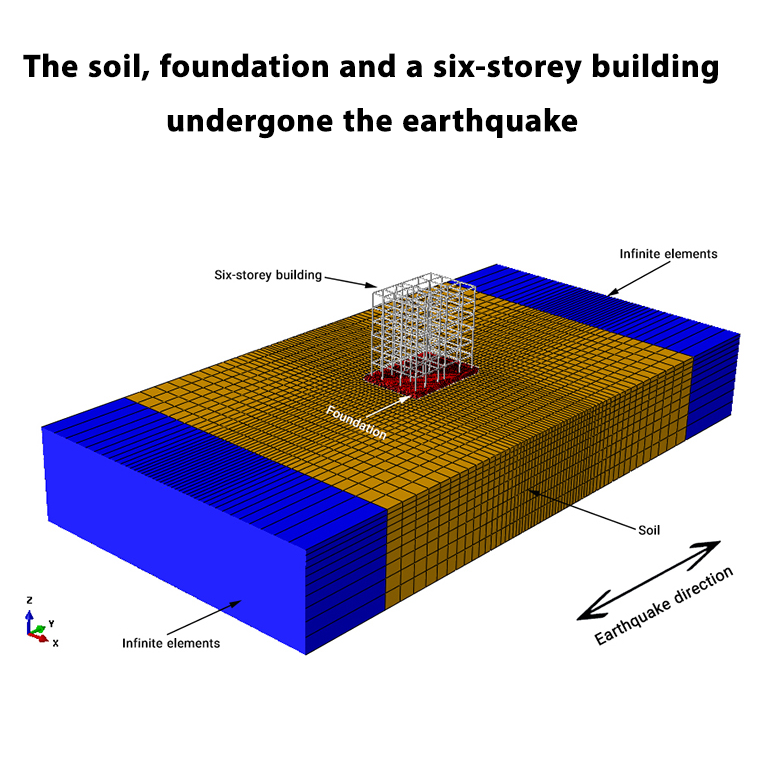
20
Soil, Foundation and a Six-Storey Building under Earthquake Loading Abaqus
View Full Tutorial →What You Will Learn in Abaqus
Develop the practical skills needed to build, analyze, and validate soil–structure interaction models in Abaqus through research-based geotechnical projects.
Model Setup
Create soil and structural geometries, define materials, assign sections, establish interactions, and prepare the finite element model.
Soil Material & Behavior
Define suitable soil material properties and model different soil conditions for geotechnical analysis in Abaqus.
Interaction & Contact
Define contact, friction, interfaces, boundary conditions, and interaction behavior between soil and structural components.
Loading & Analysis
Perform different geotechnical analyses including foundation, pile, consolidation, and other soil–structure problems.
Result Extraction & Validation
Extract important numerical results from Abaqus and compare the simulation results with published research studies.
What's Included
Everything you need to follow the project, reproduce the Abaqus analysis, and compare your results with the reference study.
Complete Abaqus Model
Ready-to-use CAE file of the complete Geotechnical Engineering model.
Abaqus Input File
Complete INP file for running the numerical analysis.
Amplitude Loading Data
Excel file containing the cyclic loading data.
Numerical Results
Excel file containing the extracted Abaqus results.
Video Tutorial
Step-by-step explanation of the complete project.
Learn Through Practical Models
Go beyond basic Abaqus tutorials and learn how geotechnical problems are modeled, analyzed, and evaluated through practical numerical examples.
Practical Examples
Learn through practical Abaqus models covering different geotechnical problems and analysis conditions.
Complete Abaqus Workflow
Follow the modeling process from geometry and materials to interactions, loading, meshing, and analysis.
Geotechnical Analysis
Explore practical problems involving foundations, piles, consolidation, and soil response under loading.
Research-Based Models
Work with models based on research studies and learn how numerical results can be compared with reference results.
Built for Practical Learning
Whether you are studying, researching, or working in geotechnical engineering, this course is designed to help you build practical soil and foundation models in Abaqus.
Students
Learn Abaqus through practical geotechnical projects involving soil, foundations, piles, and other common soil–structure interaction problems.
Researchers
Develop research-based geotechnical models and investigate soil behavior, foundation response, and numerical results using Abaqus.
Geotechnical Engineers
Improve your practical Abaqus skills for soil modeling, foundation analysis, pile behavior, and soil–structure interaction.
Questions? We've Got Answers.
Find answers to the most common questions about the course, files, Abaqus version, and access.
What Abaqus version is used in this course? +
Do I need previous Abaqus experience? +
Are the CAE and INP files included? +
Is the research paper included? +
Can I use the files with a newer Abaqus version? +
How will I receive the course files? +
Lifetime Access. Free Updates.
Once you purchase the course, you will receive all future course updates at no additional cost.
You're Not On Your Own.
If you need help with the included Abaqus models or course materials, you can contact us after your purchase for assistance.
Purchase
Get access to the complete course and included files.
Work With the Models
Follow the tutorials and use the included Abaqus files.
Get Support
Contact us if you have questions about the included models or course materials.
chat_bubble_outlineReviews
Add a review Cancel reply
Price
€59 €41
Yahya(verified owner)
Hi Saeed,
Can you please add machine foundation tutorial to this package?
Thanks